Ready to Capture the Wild?
From expert-guided game drives to exclusive wilderness locations, every moment is designed for extraordinary wildlife encounters.

Explore the remarkable life of the African wild dog, one of Africa’s most distinctive and endangered predators. Learn about its habitat, diet, social structure, hunting behavior, reproduction, conservation and importance within Botswana’s wild ecosystems.

In my years guiding through the African wilderness, I’ve had the incredible privilege of witnessing some ofIn my years guiding through the African wilderness, I’ve had the incredible privilege of witnessing some of nature’s most awe-inspiring creatures, but few have captivated me quite like the African wild dog.
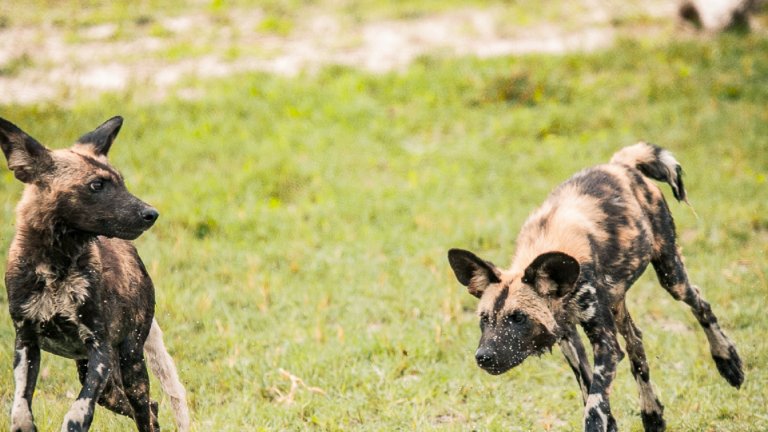
Known also as the painted dog or painted wolf, this striking and endangered carnivore stands out not just for its vibrant, uniquely patterned coat and large, rounded ears, but for its remarkable social behavior and resilience.
Every encounter with these elusive animals has deepened my appreciation for their role as top predators in sub-Saharan Africa and across the African continent, as well as their vital contribution to the delicate balance of the ecosystem.
In this guide, I want to share with you everything I’ve learned about the African wild dog, from their fascinating social structures and hunting strategies to the pressing conservation challenges they face today. Whether you’re planning a mobile photographic safari or simply eager to connect with one of Africa’s most charismatic animals, I hope this article offers you valuable insights and practical tips to appreciate and help protect these extraordinary creatures.
The African wild dog, often called the painted dog or Cape hunting dog, stands out as one of Africa’s most captivating and endangered species.
Native to the vast landscapes of sub-Saharan Africa, these wild dogs are instantly recognizable by their striking, mottled coats no two individuals share the same pattern, which is a key difference from other dogs that typically have more uniform coat markings.
Unlike other dogs, African wild dogs have only four toes on each foot instead of five, further distinguishing them from domestic and other wild dog species.
Their large, rounded ears not only give them a distinctive appearance but also enhance their acute sense of hearing, vital for communication and hunting.
The bushy tail, tipped in white, acts as a visual beacon, helping pack members stay connected as they move swiftly through the wild.
As highly social animals, painted dogs rely on close cooperation within their packs, making them exceptional hunting dogs and a vital part of Africa’s natural heritage.
Their presence is essential to maintaining ecological balance, as they regulate prey populations and contribute to the overall health of their habitats.
The African wild dog’s scientific name is Lycaon pictus, meaning “painted wolf.” This name reflects its striking multicolored fur, which features irregular patches of yellow fur, black, white, and brown.
There are several recognized subspecies of the African wild dog, each with distinct geographic ranges and characteristics: the West African wild dog (Lycaon pictus manguensis) found in West Africa, the East African wild dog (Lycaon pictus lupinus) distributed across East Africa, the Cape wild dog (Lycaon pictus pictus) native to southern Africa, the Somali wild dog (Lycaon pictus somalicus) occurring in regions like northern Mozambique and northern Somalia, and the Chadian wild dog (Lycaon pictus sharicus) found in central Africa. These subspecies reflect the species’ wide distribution and genetic diversity across the continent.
Each dog’s pattern is unique, much like a fingerprint, helping pack members recognize each other over long distances. African wild dogs have large, rounded, bat-like ears that provide excellent hearing, which is important for hunting.
These social animals have only four toes on each foot, unlike other canids, which usually have five, and a distinctive bushy tail with a white tip that serves as a visual signal when moving through dense vegetation.
While sometimes called “painted wolves,” African wild dogs are distinct from true wolves in both appearance and taxonomy, belonging to a separate genus within the canid family.
The African wild dog is a distinctive and robust canid species, standing between 60 to 75 centimeters (24 to 30 inches) at the shoulder and weighing from 18 to 36 kilograms (40 to 79 pounds), making it the bulkiest of African canids. Their lean, tall bodies are built for endurance and speed, with long legs and large lungs that allow them to maintain speeds of up to 44 miles per hour (70 km/h) over long distances during hunts.

Unlike most canids, African wild dogs have only four toes on each foot, with the middle two toepads fused, which enhances their speed and maneuverability. Their fur consists entirely of stiff bristle-hairs without an undercoat, which may help with temperature regulation and communication. Their large, rounded ears not only contribute to their iconic species look but also provide excellent hearing, crucial for both hunting and social interactions.
One of the unique physical traits of African wild dogs is that they have only four toes on each foot, unlike most dogs that have five on their forefeet. The middle two toepads are fused, which enhances their speed and maneuverability, aiding in their ultimate hunter status.
Their coats are a striking mosaic of irregular patches of red, black, brown, white, and yellow fur, with each individual’s pattern being unique, serving as a visual identifier within the pack.
Overall, the African wild dog’s physical adaptations make it a highly efficient predator, closely accompanied by its pack members during hunts and daily life.
African wild dogs primarily inhabit the open plains, savannas, and sparse woodlands of sub-Saharan Africa, with the largest populations found in the southern part of the continent, including Botswana, Zimbabwe, Namibia, Zambia, and Tanzania. They are also present in Central Africa and are known to hunt and roam across Central and Southern Africa.
They are now primarily restricted to these countries. Historically, African wild dogs were found across nearly 40 countries in sub-Saharan Africa, including mountain habitats as well as open plains and woodlands, but have disappeared from 90% of their former geographic range.
Their presence in West Africa is now extremely rare, with only isolated populations potentially existing in countries like Senegal, Guinea, and Mali. The Kavango-Zambezi Conservation Area (KAZA) provides critical habitat for African wild dogs, and Kruger National Park is recognized as a key stronghold for stable populations.
They prefer open habitats that allow them to use their incredible stamina and speed up to 44 miles per hour to chase prey over long distances.
Unfortunately, increasingly fragmented habitats pose a major threat to their survival, as expanding human settlements and agriculture reduce their roaming space and increase human-wildlife conflict.
African wild dogs live in permanent packs consisting of two to 27 adults and yearling pups. Males usually outnumber females 3:1 in these packs.
African wild dog packs are typically led by a monogamous breeding pair, with the alpha male and dominant female being the only pair members to breed, producing more pups than any other canid—often between six to sixteen pups per litter.

Unlike most social mammals, female African wild dogs typically disperse to join other pack members in new packs, while males often remain with their natal group.
Solitary living is rare, as African wild dogs are highly social and almost always live and hunt in packs. The entire pack, including other pack members, participates in caring for pups, sharing food, and hunting cooperatively. Adults regurgitate food to feed pups and other pack members, demonstrating strong cooperative behavior.
Pups begin eating solid food at three to four weeks of age, marking a critical transition from dependence on milk to independent feeding outside the den.
Larger African wild dog packs may form in response to seasonal migrations or prey availability and can hunt larger prey animals such as wildebeest and wildebeest calves.
African wild dogs communicate through a variety of vocalizations, including twittering, whining, yelping, and barking. They have also been observed to use a unique form of communication called ‘sneeze-voting,’ where dominant dogs sneeze to influence group decisions, such as when to start hunting.
During hunts, these social animals use coordinated strategies, approaching prey silently before initiating a chase to maximize their hunting success. African wild dog packs are specialized pack hunters that primarily target medium-sized antelopes, but they also adjust their hunting strategy based on the specific prey animal. Their wild prey includes antelopes, wildebeest calves, and smaller animals such as cane rats. Dogs prefer wild prey, such as antelopes and wildebeest, over livestock whenever possible.
When hunting alone, they may pursue smaller prey such as rodents, hares, birds, and cane rats, which are typically consumed entirely. Their hunting success rate is impressive, often achieving over 60% success in their chases. Pups are given priority at kills, eating first before the dominant pair and other adults.
African wild dogs and hyenas are often mistaken for one another due to their similar appearance and social behavior, yet both are part of the broader community of top predators in Botswana’s iconic ecosystems.
Both species hunt in packs and have their own hierarchical systems, but hyenas have powerful jaws that can crush bones, while African wild dogs have long, sharp teeth for tearing flesh.
African wild dogs are more agile and slender compared to the stockier and more robust hyenas.
Hyenas are generally more numerous, with populations estimated between 27,000 and 47,000 individuals, while African wild dogs are critically endangered with only about 6,600 remaining.
African wild dogs are primarily diurnal hunters, while hyenas are known for their nocturnal scavenging behavior. Hyenas often steal kills from African wild dogs, making them competitors for the same prey.
African wild dogs are renowned for their specialized and highly effective hunting strategies, which rely heavily on pack cooperation, endurance, and adaptability. These carnivores primarily hunt medium-sized antelopes, such as greater kudu, Thomson’s gazelle, impala, and blue wildebeest, tailoring their tactics based on the prey species.
Their hunting approach begins with a silent, coordinated stalking phase, followed by a high-speed chase that can last from 10 to 60 minutes, covering distances of up to 2 kilometers (1.2 miles). African wild dogs can maintain speeds of roughly 44 miles per hour (70 km/h) for extended periods, showcasing remarkable stamina compared to other predators.

The pack uses different strategies depending on the prey: when hunting wildebeest, they rush at the herd to panic and isolate a vulnerable individual, while for territorial antelope species that run in wide circles, the dogs cut across escape routes to intercept them. Smaller prey like rodents and hares may be hunted individually.
Hunting success rates are notably high, often exceeding 60%, with some studies reporting success as high as 90%. This efficiency is attributed to their relentless pursuit, cooperative teamwork, and strategic communication during the hunt. After a successful kill, the pack quickly consumes the prey, with pups and yearlings feeding first, followed by the dominant pair and other adults.
This combination of endurance, strategy, and social cooperation makes the African wild dog one of the most effective hunters in the animal kingdom.
The threats African wild dogs face are numerous and severe. The African wild dog is classified as an endangered species by the International Union for Conservation of Nature (IUCN), with fewer than 7,000 left in the wild.
Threats African wild dogs include habitat fragmentation, which increases human-wildlife conflict and the risk of localized extinction due to epidemic and infectious diseases. Natural predators such as lions, hyenas, and even eagles also pose risks, but human-related issues like habitat loss and disease transmission are more significant.
They are classified as Endangered on the IUCN Red List. As one of Africa’s large carnivores, African wild dogs play a crucial ecological role in maintaining the balance of their ecosystems, just as African leopards and other apex predators do across much of the continent.
Primary threats include habitat fragmentation, human-wildlife conflict especially with livestock farmers and infectious diseases such as rabies and canine distemper transmitted by domestic dogs.
Conservation efforts for African wild dogs include establishing protected wildlife corridors to connect fragmented habitats. Community involvement is crucial in the conservation of African wild dogs, as local ecological knowledge can help identify significant habitats.
African wild dogs are often hunted and killed by farmers who fear for their livestock, contributing to their declining population. They are also highly susceptible to infectious diseases like rabies and canine distemper, which can wipe out entire packs.
Road accidents are a major cause of mortality, and snares set for other wildlife also kill many African wild dogs in some areas.
Conservation groups and local communities are working together to create protected corridors, improve livestock management techniques, and reduce retaliatory killings to help stabilize wild dog populations, which in turn supports the wider predator community, including Africa’s big cats such as lions, leopards, and cheetahs.
Many programs now offer farmers training in livestock management to reduce conflict and promote coexistence. Conservation initiatives include awareness campaigns to dispel myths about African wild dogs.
National Geographic has played a pivotal role in bringing the story of the African wild dog also known as the painted wolf to a global audience. BBC has deemed them the most succesful huters in the wild.
Through breathtaking photography and in-depth documentaries, National Geographic has highlighted the painted dogs’ complex social lives, their remarkable hunting strategies, and the urgent conservation challenges they face as an endangered species.
These features often showcase the painted dogs’ ability to work as a cohesive unit, led by a dominant pair, and their unique methods of communication, such as the famous “sneeze” used to coordinate group decisions.
By shining a spotlight on the painted wolf’s plight, National Geographic has helped raise awareness about their declining conservation status and the need for immediate action to protect these wild endangered animals.
The organization’s storytelling inspires support for conservation efforts and encourages responsible wildlife tourism, ensuring that the painted dogs of Africa remain a symbol of the continent’s wild beauty.
Scientific research, including resources like the Animal Diversity Web, has greatly expanded our understanding of the African wild dog’s biology and behavior.
Studies published by leading institutions and presses, such as Johns Hopkins University Press and California Press, delve into the species’ unique adaptations like having only four toes per foot and a highly efficient social structure.
Researchers have documented the painted dog’s role as a top canid species in African ecosystems, their reliance on pack cooperation for hunting, and the challenges they face from habitat loss, disease, and competition with larger predators like spotted hyenas.
Ongoing research continues to uncover new insights into their reproductive strategies, pack dynamics, and the impact of human activities on their survival.
By compiling and sharing this knowledge, the scientific community provides a foundation for effective conservation strategies and helps ensure that the African wild dog, Lycaon pictus, remains a vital part of Africa’s animal diversity web.
Addressing human-wildlife conflict is crucial for the survival of African wild dogs, especially as expanding agriculture and settlements encroach on their habitats.
Conservation groups and local communities are working together to implement innovative livestock management techniques, such as predator-proof livestock enclosures and improved herding practices, to reduce losses and foster coexistence.
Education and community engagement play a key role, empowering local people to become stewards of wildlife and benefit from conservation initiatives. By promoting sustainable land use and supporting alternative livelihoods, these efforts help minimize retaliatory killings and habitat loss.
Collaborative projects also focus on creating wildlife corridors that allow painted dogs to roam safely between protected areas, reducing the risk of conflict and supporting larger, healthier populations.
Through these combined strategies, conservationists are making significant strides in protecting this endangered carnivore and ensuring a future where wild dogs and people can thrive side by side in Africa, especially when paired with low-impact experiences like mobile safaris that follow wildlife across remote landscapes. The Kavango-Zambezi Conservation Area (KAZA) is a transboundary conservation area that provides critical habitat for African wild dogs.
Photographing African wild dogs presents unique challenges and rewarding opportunities, much like any dedicated photo safari focused on Botswana’s pristine landscapes and wildlife. Here are some tips to help you capture stunning images on your Wild For Game Safaris mobile photographic safari, which pair well with broader advice on how to plan a photographic safari, from timing to equipment and guiding:
Understanding pack dynamics and hunting behavior will increase your chances of capturing compelling shots. African wild dogs are most active during the day, especially in early morning and late afternoon when they hunt. Look for the pack’s bushy tails with white tips and large rounded ears to spot them from a distance.
Given the wild dogs’ wary nature and the open habitats they prefer, a telephoto lens (at least 300mm) is essential to photograph them without disturbing their natural behavior. A zoom lens also allows you to capture close-up shots of facial expressions and social interactions within the pack.
The African wild dog’s eyes and coat patterns are captivating. Use your camera’s autofocus to lock onto the eyes for sharp portraits. Try to highlight the distinctive yellow fur patches and irregular markings that make each dog unique.
African wild dogs are social animals with rich pack dynamics. Photograph moments of cooperation like regurgitating food for pups, greeting rituals, or hunting teamwork. These scenes tell the story of their complex social structure and make your photos more engaging.
Open plains can produce harsh sunlight, so aim to shoot during the golden hours around sunrise and sunset for softer, warmer light. Use the natural environment—such as tall grasses or acacia trees—to frame your subjects and add depth to your images.
Wild dogs are endangered and sensitive to disturbance. Always maintain a respectful distance, follow your guide’s instructions, and be patient. Sometimes the best shots come from waiting quietly and observing their natural behavior over time.
Your photographs can contribute to African wild dog conservation by raising awareness and supporting ethical wildlife tourism. Sharing your images and stories helps educate others about the species’ plight and the importance of preserving their habitats.
Wild For Game Safaris emphasizes responsible photography practices that prioritize animal welfare and habitat protection, especially when timing trips to match the best season for wildlife photography in the Okavango Delta.
The African wild dog is a remarkable symbol of Africa’s wild heritage an endangered carnivore with complex social lives and breathtaking beauty. Whether you’re a wildlife enthusiast or a photographer eager to capture its essence, understanding the species and practicing ethical photography will enrich your safari experience.
Join a mobile photographic safari with Wild For Game Safaris to witness the painted wolf in action and bring home unforgettable images that celebrate this extraordinary animal, or opt for an extended itinerary like a Northern Botswana private safari through Moremi, Khwai, Savuti, and Chobe.
For more insights and photography tips on African wildlife, explore our other guides and consider booking a photographic safari that combines adventure with conservation, including in-depth resources on planning immersive photographic safari adventures.
The African wild dog (Lycaon pictus), also known as the painted dog or painted wolf, is a highly social and endangered carnivore native to sub-Saharan Africa. It is recognized for its unique multicolored coat, large rounded ears, and cooperative pack behavior.
African wild dogs primarily inhabit the open plains, savannas, and sparse woodlands of sub-Saharan Africa, with the largest populations found in southern Africa countries such as Botswana, Zimbabwe, Namibia, Zambia, and Tanzania.
They are specialized pack hunters that use stamina and teamwork to chase down medium-sized prey, mainly antelopes. African wild dogs coordinate their hunts through vocalizations and a unique ‘sneeze-voting’ system to decide when to begin hunting.
Their populations have declined due to habitat fragmentation, human-wildlife conflict, diseases like canine distemper, road accidents, and competition with larger predators such as lions and spotted hyenas.
Conservation efforts include establishing protected wildlife corridors, community-based livestock management techniques, awareness campaigns to reduce human-wildlife conflict, and research projects led by conservation groups and zoological societies.
Supporting conservation organizations, promoting responsible wildlife tourism, spreading awareness about their ecological importance, and advocating for habitat protection are effective ways to contribute to their survival, and you can also contact Wild For Game Safaris to discuss a tailored safari experience that supports conservation.
Although they share some similarities, African wild dogs are more agile, have unique coat patterns, and belong to a different genus. Hyenas have stronger jaws for bone-crushing and tend to scavenge more, while wild dogs are primarily diurnal hunters relying on endurance and cooperation.
The dominant female usually produces between six to sixteen pups per litter, more than any other canid species, and the entire pack helps care for and feed the young.
‘Sneeze-voting’ is a fascinating communication behavior where pack members sneeze to signal agreement in group decisions, such as when to start a hunt. The more dominant dogs sneeze first, influencing the pack’s actions.
African wild dogs are primarily diurnal, meaning they are most active and hunt during the day, especially in the early morning and late afternoon.