Ready to Capture the Wild?
From expert-guided game drives to exclusive wilderness locations, every moment is designed for extraordinary wildlife encounters.

Wildlife photography is one of the most demanding genres in the photography world. Unlike landscape photography or portrait work, it requires gear that can track unpredictable subjects, operate in harsh conditions, and deliver sharp results from extreme distances. The margin between a once-in-a-lifetime shot and an empty frame often comes down to milliseconds and millimeters.
This guide breaks down the best camera gear for wildlife photography available right now, covering camera bodies, lenses, and accessories across multiple budgets. Every recommendation is based on real world use and performance under the conditions that actually matter: wet hides, freezing mornings, and subjects that refuse to cooperate.
Successful wildlife photography depends on both skill level and proper photography equipment. Understanding wildlife behavior to anticipate their movements will always matter more than megapixel counts. But having the right tools makes a measurable difference in your hit rate, your keeper percentage, and ultimately, the quality of the incredible wildlife images you bring home.
Choosing wildlife photography gear requires a different evaluation framework than general photography equipment. Marketing specs tell part of the story. Real world performance in the field tells the rest.
Here are the criteria we weighted most heavily:

The camera bodies below represent the strongest options across price points and sensor formats. Each has specific strengths that make it suited to different types of wildlife shooters. High-resolution sensors allow cropping in wildlife photography, which becomes especially important when you can’t get close enough to fill the frame.
Mirrorless cameras are favored for silent shooting and portability, and every recommendation here is mirrorless. The technology has matured to the point where there’s no practical reason to choose a DSLR for wildlife work in 2026.
The Sony A1 II is a 50.1 MP full frame stacked BSI CMOS mirrorless camera capable of 30 fps continuous shooting with full AF/AE tracking. Launched in late 2024, it remains the benchmark for wildlife and sports hybrid performance heading into mid-2026.

Why It Stands Out: The A1 II includes a dedicated AI Processing Unit that improved bird eye detection speed by approximately 50% over the original A1. It tracks animal eyes, heads, and bodies with remarkable accuracy, even when subjects move through partial occlusion. This is the most advanced animal detection AF system available from Sony cameras today.
Best For: Professional wildlife photographers needing maximum performance across stills and video.
Key Strengths:
Possible Limitations: The price sits around $6,500 for the body alone. File sizes at 50 MP in RAW are substantial, increasing storage and workflow demands. The depth of customization options creates a steep learning curve for photographers new to the Sony ecosystem.
The Nikon Z9 is a 45.7 MP flagship mirrorless camera and a top wildlife photography camera by any measure. It shares its core DNA with the more compact Z8 but adds a built-in vertical grip and larger battery.
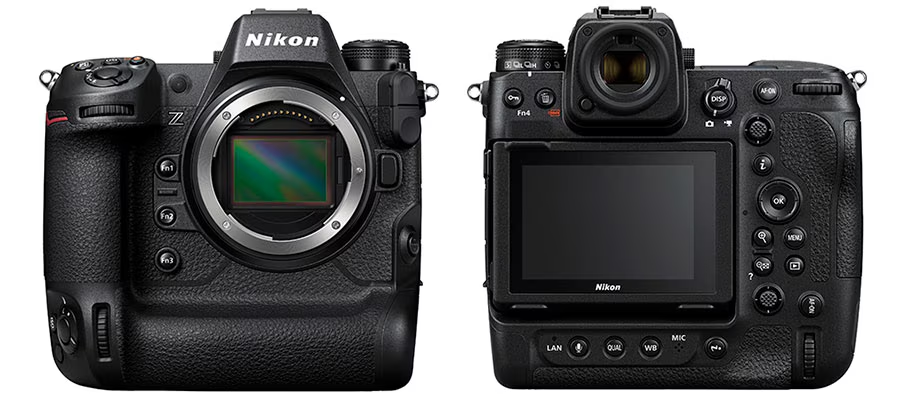
Why It Stands Out: Exceptional battery life relative to competitors and robust weather sealing make the Z9 a workhorse for extended field sessions. Its subject detection system covers animals, birds, and even insects across multiple categories.
Best For: Wildlife photographers who prioritize durability and reliability in demanding environments.
Key Strengths:
Possible Limitations: The integrated grip makes it one of the heaviest flagship bodies. The Z mount super-telephoto lens lineup, while excellent, represents significant additional cost. The menu system is complex and can frustrate photographers switching from other brands.
The Canon EOS R6 Mark II delivers 24.2 MP from a full frame sensor with Canon’s refined Dual Pixel CMOS AF II system. It sits at a price point that makes serious wildlife photography accessible without the flagship tax.

Why It Stands Out: This is arguably the best balance of performance and value for wildlife work. The AF system tracks animals reliably, and Canon’s RF lens ecosystem gives shooters access to one of the deepest telephoto lineups available.
Best For: Enthusiast photographers upgrading to serious wildlife gear who want a great camera without spending flagship prices.
Key Strengths:
Possible Limitations: At 24.2 MP, the lower resolution limits cropping flexibility compared to 45-50 MP competitors. This matters when you need to crop aggressively from distant subjects.
The Sony A7 IV packs 33 MP into a versatile full frame body that handles both stills and video with real-time subject tracking. It represents Sony’s sweet spot between the entry-level A7C line and the flagship A1 II.

Why It Stands Out: Great hybrid performance for photographers who create both still images and wildlife video content. The 33 MP sensor provides enough resolution for meaningful crops while keeping file sizes manageable.
Best For: Content creators who shoot both stills and wildlife videos and need one body that does both well.
Key Strengths:
Possible Limitations: Burst rate tops out at 10 fps, which can feel limiting for birds in flight. The menu system, while improved, still carries legacy Sony complexity.
The Nikon Z6 III brings 24.5 MP resolution with dual processors that punch above its weight class in autofocus performance. It bridges the gap for DSLR shooters entering the mirrorless world.

Why It Stands Out: Dual processors give the Z6 III autofocus response that rivals cameras costing twice as much. The partially stacked sensor improves readout speed and reduces rolling shutter.
Best For: Photographers switching from DSLR to mirrorless who want a familiar Nikon experience with modern capabilities.
Key Strengths:
Possible Limitations: The Z-mount lens selection, while growing, remains smaller than Canon RF or Sony E. Some wildlife-critical telephoto options from other brands aren’t available natively.
The Sony A6700 is a 26 MP APS-C mirrorless camera that delivers serious wildlife capabilities in a compact package. The crop factor effectively extends every lens by 1.5x, turning a 400mm lens into 600mm equivalent reach.

Why It Stands Out: The built-in crop factor extends telephoto reach cost-effectively. Pair the A6700 with a Sony FE 200-600mm and you get an effective 300-900mm range without buying specialized super-telephoto glass.
Best For: Budget-conscious photographers wanting serious wildlife capabilities without the weight and cost of full frame systems.
Key Strengths:
Possible Limitations: The smaller sensor limits low light performance compared to full frame alternatives. Top-tier APS-C telephoto options are fewer than in the full frame E-mount lineup.
The Canon EOS R50 is a 24.2 MP APS-C entry level camera that opens the door to RF-mount wildlife photography at an accessible price. It’s the most affordable body on this list.

Why It Stands Out: Most affordable entry into serious wildlife photography with access to Canon’s complete RF lens ecosystem.
Best For: Beginners learning wildlife photography fundamentals who want room to grow into professional glass.
Key Strengths:
Possible Limitations: Limited weather sealing makes it a bad idea for consistent use in bad weather without protection. Slower burst rates compared to higher-tier options. Buffer depth can restrict sustained shooting of fast action.

Your lens determines image quality more than any other single piece of photo gear. Versatile zoom lenses are popular for capturing wildlife because they allow you to adapt to unpredictable distances, but prime lenses provide unmatched sharpness and low-light performance for wildlife photography. Telephoto lenses between 400mm to 800mm are ideal for wildlife, allowing you to capture wildlife from a distance to avoid spooking them.
The best lens for your setup depends on your camera and lens system, your budget, and your primary subjects.
The Sony FE 200-600mm f/5.6-6.3 G OSS remains one of the most respected super-telephoto zoom lenses for wildlife work. Despite being older than some competitors, its optical performance and build quality keep it at the top.
Why It Stands Out: The internal zoom mechanism means the lens doesn’t extend during zooming, reducing dust ingress and improving balance. Optical stabilization is excellent for handheld shooting.
Best For: Wildlife photographers needing versatile telephoto reach in the Sony E-mount system.
Key Strengths:
Possible Limitations: Variable aperture limits low light shooting at the long end. At 2.1 kg, it’s relatively heavy for extended handheld use. A sturdy tripod can stabilize heavy lenses like this for wildlife photography during long sessions.
Nikon’s S-line 100-400mm delivers flagship optical quality in a zoom that pairs naturally with the Z9 and Z8. Combined with Nikon’s 1.4x teleconverter, it reaches 560mm with strong image quality.
Why It Stands Out: Fast autofocus and excellent VR stabilization make this a responsive telephoto lens for tracking moving subjects.
Best For: Nikon users prioritizing optical quality and build in a lighter package than 600mm alternatives.
Key Strengths:
Possible Limitations: Shorter reach than 600mm alternatives means you may need teleconverters more often. Teleconverters can extend focal lengths by 1.4 to 2.0 times, but each step costs some light and can slightly reduce sharpness. Higher price point than third-party alternatives.
Canon’s L-series 100-500mm brings professional optical quality across a wide zoom range. The 100mm short end adds versatility that pure super-telephoto zooms lack, and a 70-200mm lens offers versatility for wildlife photography when subjects are closer, but this lens covers that ground and extends much further.
Why It Stands Out: L-series optical quality in a versatile zoom package with fast, silent autofocus.
Best For: Canon shooters wanting professional telephoto performance with range flexibility.
Key Strengths:
Possible Limitations: The variable aperture narrows to f/7.1 at 500mm, which limits performance in low light conditions. This is one of the more expensive telephoto zooms in its class.
The Sigma 150-600mm Sports gives photographers 600mm of reach at a price point significantly below first-party alternatives. Available for both Canon RF and Sony E mounts, it brings serious capability to photographers who don’t want to pay the premium brand tax.
Why It Stands Out: Professional performance at a more accessible price point. A 2x teleconverter expands a lens’s focal length for distant subjects, and with compatible Sigma converters, you can push this lens further when needed.
Best For: Photographers seeking maximum reach without premium brand pricing, making it an excellent value for wildlife photographers on a budget.
Key Strengths:
Possible Limitations: Larger and heavier than some first-party options. Autofocus speed, while solid, trails behind flagship lenses from Canon, Nikon, and Sony. It’s a big lens that benefits from tripod or gimbal support.
The Canon RF 600mm f/4 L IS USM is the ultimate telephoto lens for professional wildlife work. Fixed focal length super-telephotos like this deliver optical performance that zoom lenses simply cannot match.
Why It Stands Out: Ultimate optical quality and a constant fast f/4 aperture throughout. This is the best lens money can buy for wildlife photographers who need peak performance in all conditions.
Best For: Professional wildlife photographers with a serious budget who demand the absolute best.
Key Strengths:
Possible Limitations: Extremely expensive. Heavy enough to require tripod or gimbal heads for any extended shooting. Fixed focal length means you carry this alongside other gear for different subjects at various distances.
For photographers on a tighter budget, the Sony 400-800mm lens costs $2900 and covers a wider zoom range, making a 400mm to 800mm lens ideal for wildlife photography without the five-figure investment of a fast prime.
It’s also worth noting that macro lenses around 100mm are popular for close-up wildlife shots like insects and amphibians. A dedicated macro lens fills a different role than these telephoto options but is valuable if you photograph animals at extremely close range. Wide-angle lenses are useful for capturing wildlife in context, especially when photographing subjects in their habitat, though a wide angle lens serves a very different purpose than the reach-focused glass listed here.
All the gear in the world won’t help if your camera accessories don’t support your workflow in the field. Here’s what matters most.
Opt for carbon fiber tripods for stability and lightness. Brands like Gitzo (GT3543XLS) and Really Right Stuff offer low-vibration platforms that handle heavy super-telephoto lenses without flexing. For long lenses, the right head makes all the difference. Gimbal heads like the Wimberley WH-200 or Benro GH2 allow smooth, balanced tracking of birds in flight and fast-moving mammals. A standard ball head is a bad idea for a big lens because it can’t support the weight safely.
For photographers who cover ground on foot, lightweight alternatives like the Leofoto LS-284C reduce carry weight without sacrificing critical stability. Every tripod setup needs the right head matched to your heaviest camera and lens combination.
High-speed memory cards are non-negotiable for burst shooting. CFexpress Type B cards sustain the bandwidth needed for 30 fps RAW bursts on flagship bodies. Dual card slots provide redundancy, and in remote places where reshooting isn’t possible, that redundancy matters enormously.
Battery life is one of the most underestimated challenges in outdoor and wildlife photography. Pack extra batteries and a power bank for extended trips, and think through your broader packing list the way you would for a safari outfitter’s what to bring on a photo safari checklist. Carrying 3-4 spare batteries is standard practice for full-day sessions. Store batteries close to your body in cold weather to maintain their capacity, as cold temperatures can cut available power dramatically.
Invest in a durable backpack to protect your gear. Lightweight camera bags are essential for carrying gear outdoors, and options like the Think Tank Photo Airport series balance protection with airline compatibility. A good photo backpack distributes weight across your hips and shoulders, which matters during long hikes with heavy setups.
For weather protection, use rain covers like those from LensCoat. A protective filter on your front element guards against scratches and salt spray in marine environments. Lens hoods provide both optical benefits and physical protection. Use padded lens wraps to protect lenses during hikes when they’re stored in your bag.
Pack silica gel packs to reduce condensation risks, especially when moving between temperature extremes. Camera bags with internal dividers help organize two setups or separate camera bodies from long lenses.

Here’s how the seven recommended bodies stack up by primary use case:
Using two cameras allows for quick perspective switching in wildlife photography. Many working wildlife photographers carry two bodies: one with a super-telephoto and another with a mid-range zoom, enabling fast response to changing situations.
Wildlife photography doesn’t have to break the bank, but it does require intentional investment. Here’s how the budget tiers break down:
| Tier | Budget Range | What You Get |
|---|---|---|
| Entry Level | $1,500 – $3,000 | APS-C body + telephoto zoom (e.g., Canon R50 + RF 100-400mm) |
| Enthusiast | $3,000 – $6,000 | Full frame body + quality telephoto (e.g., Canon R6 II + RF 100-500mm) |
| Professional | $6,000+ | Flagship body + super-telephoto prime or premium zoom |
Prioritize your lens investment over your camera body. Bodies depreciate and get replaced every few years. A great telephoto lens holds its value and its performance for a decade or more.
Consider used gear and rental options for expensive equipment. Renting a $13,000 super-telephoto prime for a specific trip costs a fraction of ownership and lets you test before committing. The additional cost of renting over time adds up, but it’s smarter than buying gear that sits unused.
Beginners should prioritize ease of use and automatic modes. Shoot in aperture priority mode for better exposure control while learning. Use auto ISO to let the camera handle sensitivity adjustments while you focus on composition and timing. Shutter speed management becomes intuitive with practice, but automatic modes reduce the number of variables you’re juggling.
Intermediate photographers benefit from customizable controls and advanced autofocus settings. This is the stage where understanding continuous autofocus for tracking moving wildlife separates good results from great photos. Learning to fine-tune AF sensitivity, tracking persistence, and zone selection dramatically improves keeper rates.
Advanced users need maximum performance and professional features. Customizable button mapping, deep AF tuning, and high-speed workflows become essential when shooting is the primary profession.
Different subjects demand different gear priorities, and joining a dedicated photo safari in Botswana’s pristine ecosystems highlights how subject matter and location shape your choices:
The ecosystem you choose locks you into a lens mount, so this decision carries long-term weight:
Other photographers will advocate passionately for their chosen system. What matters is whether the system has the lenses you need, the ergonomics that feel natural, and the upgrade path that matches your ambitions, especially if you plan to join guided photographic safari adventures in Africa where reliability and familiarity with your setup matter more than brand loyalty.

The photography industry continues to grow, and the technology available to wildlife photographers in 2026 is remarkable. Modern cameras with AI-driven subject detection, 30 fps burst rates, and 8+ stops of stabilization have made capturing wildlife more achievable than ever before. High resolution sensors, advanced AF, and lightweight models mean that photographers at every skill level can pursue this genre seriously.
But technology doesn’t replace fieldcraft. Understand animal behavior to anticipate their movements. Learn the habits, patterns, and habitats of your subjects. The photographer who knows where a raptor will turn is worth more than any other gear upgrade. No amount of reliable gear compensates for being in the wrong place at the wrong time.
The best outdoor photography happens when preparation meets opportunity. That means having one good camera and lens combination you know intimately. If you’re building your first wildlife kit, start there or plan a dedicated photographic safari with the right gear and timing to accelerate your learning. One body, one telephoto lens, and time in the field. You don’t need two cameras on day one. You need one camera you’ve mastered.
If you’re a big fan of this genre and ready to invest, start by choosing your lens first and matching your body to it. That’s where the image quality lives. For inspiration on how that gear translates into real-world field work, explore safari-focused wildlife photography stories and tips and study how photographers work with changing light, dust, and distance. Photograph wildlife with intention, respect your subjects, and let the right gear amplify the skills you build through practice.
Whether you’re shooting from a cold weather blind in January or tracking migration across open savanna, the outdoor gear you choose shapes your experience. Apply ethical wildlife photography techniques alongside smart gear choices to protect the animals you photograph and the habitats they rely on. Choose lightweight gear to minimize backpack weight on long hikes, invest in weather-sealed cameras to protect against harsh conditions, and carry the other gear that keeps you shooting longer: extra batteries, fast memory cards, and protection from the elements.
The best camera gear for wildlife photography is the setup that gets out of your way and lets you focus on the moment. Everything else is details.
A gimbal head is generally considered the best choice for wildlife photography, especially when using long telephoto lenses. It allows smooth and balanced movement, making it easier to track fast-moving animals. Ball heads can be used for lighter setups or shorter lenses but may not provide the same level of stability and fluidity.
While not always essential, a sturdy tripod is highly recommended for wildlife photography, particularly when using heavy telephoto lenses or shooting in low light. It stabilizes your camera, reduces shake, and helps achieve sharper images. Lightweight carbon fiber tripods are preferred for portability without sacrificing stability.
Use weather-sealed cameras and lenses to withstand harsh environmental conditions. Protective covers, rain gear, and padded lens wraps can safeguard your equipment from rain, dust, and bumps. Packing silica gel packs helps prevent condensation inside your gear bag.
Telephoto lenses between 400mm and 800mm are ideal for capturing distant wildlife without disturbing them. Versatile zoom lenses are popular for adapting to various distances, while prime lenses offer superior sharpness and low-light performance. Macro lenses around 100mm are great for close-up wildlife shots, and wide-angle lenses help capture animals in their habitat context.
Battery life is critical since wildlife photography often involves long hours in the field without access to power. Carry multiple fully charged batteries and consider power banks or solar chargers for extended trips. Storing batteries close to your body in cold weather helps maintain their charge.