Ready to Capture the Wild?
From expert-guided game drives to exclusive wilderness locations, every moment is designed for extraordinary wildlife encounters.


A photographic safari is not simply a game drive with a camera. It is a deliberate pursuit of light, behaviour, and position where every element conspires to create images that hold weight. The right safari destination determines whether you return with thousands of frames cluttered by vehicle bonnets and stressed animals, or with a curated portfolio of wildlife captured in its natural habitat, behaving authentically under optimal conditions.
Destination choice shapes everything: wildlife density, vehicle pressure at sightings, guide expertise in animal behaviour prediction, and the flexibility to chase golden light across varied landscapes. For wildlife photographers serious about their craft, understanding why certain regions outperform others is as critical as mastering a telephoto lens.
Dawn breaks over the Okavango Delta in late August 2026. Dew clings to the grass around a small mobile camp as distant lion calls carry across the floodplain. A group of six photographers loads quietly into a customised vehicle doors removed, beanbags positioned while their guide studies the light angling through mopane woodland. This is not a rushed departure. This is preparation meeting opportunity.

Botswana’s “high-value, low-volume” tourism policy, formalised in the 1990s, fundamentally reshapes the african photo safari experience. The government caps bed nights in concessions, restricts vehicle numbers, and mandates that 25-40% of tourism revenue supports local communities. The result: pristine scenes where wildlife photographers capture elephants crossing channels or leopards descending trees without competing vehicles disrupting compositions.
A mobile photographic safari involves lightweight, seasonal camps relocated 2-4 times per itinerary across private concessions. Teams of 6-10 staff provide hot showers, gourmet meals, and charging stations for camera gear allowing seamless pursuit of migratory herds or flood-driven predator concentrations that fixed lodges simply cannot match.
Contrast this with fixed lodges in crowded regions. In the Maasai Mara’s core areas during peak season, 30-50 vehicles may converge on a single lion sighting. In Botswana’s private concessions, vehicle limits enforce 4-per-sighting protocols. The compositional benefits are immediate: unobstructed angles, extended time with subjects, and the ability to reposition for backlighting without traffic.
By 2026, Botswana’s leading operators routinely design 7-12 day photographic circuits linking the Okavango, Khwai, and Chobe for both amateur and professional photographers.

The Okavango Delta a UNESCO World Heritage Site since 2014 spans 1.8 million hectares where Angolan rains transform Kalahari sands into a labyrinth of channels, islands, and lagoons. This inland alluvial fan supports over 200 mammal species and 480 bird species, creating photographic opportunities across mosaic habitats of floodplain grassland, riparian woodland, and permanent swamps.
Core photographic subjects include:
Optimal seasons align with flood dynamics. The dry season from June–October stabilises water levels for reliable predator-prey interactions and golden light on lagoons. Shoulder months (April–May and November) deliver towering cumulonimbus skies for high-drama landscape photography and 20-30% fewer visitors than July–August peaks.
Mobile safari advantages in the Delta include exclusive access to 40% of concessions under long-term leases, permitting off road driving, night drives revealing genets and Pel’s fishing owls, and multi-modal shooting via mokoro canoes, motorised boat safaris, and elevated safari vehicles. Typical 2026 circuits span 7-10 days: 3 nights in the eastern Delta for predator focus, shifting to southern channels for aquatic birdscapes and elephant interactions.
Chobe National Park encompasses 11,700 square kilometres along the Chobe River, hosting some of Africa’s highest elephant densities. Between July and October, 50,000-100,000 elephants converge on the riverfront—creating spectacles of matriarch-led herds swimming channels at sunset, dust plumes rising as buffalo gather, and wild animals of extraordinary diversity concentrated at water sources.

Must-capture images include:
Mobile camps positioned in adjacent Chobe Forest Concession or private riverfront zones allow pre-dawn access bypassing public park gates that open at 6 AM, minimising mid-day vehicle queues of 20+ in core areas. Specialised photographic boats fitted with gimbal mounts and camouflage provide water-level portraits along the Chobe River unattainable from land transforming standard wildlife shots into intimate environmental narratives.
Timing nuances: Late dry season (August–October) delivers mega-herd concentrations for action sequences. Wet season offers reflective pools post-thunderstorms and peak vibrant birdlife, with operator logs noting 80% sighting success for predators drawn to water.
Northern Botswana’s Khwai Community Concession, Moremi Game Reserve, and Linyanti/Selinda areas span 500,000 hectares of teak woodland, mopane scrub, and seasonal floodplains. These quieter concessions deliver predator densities rivalling East Africa’s vast open plains, with significantly less vehicle pressure.
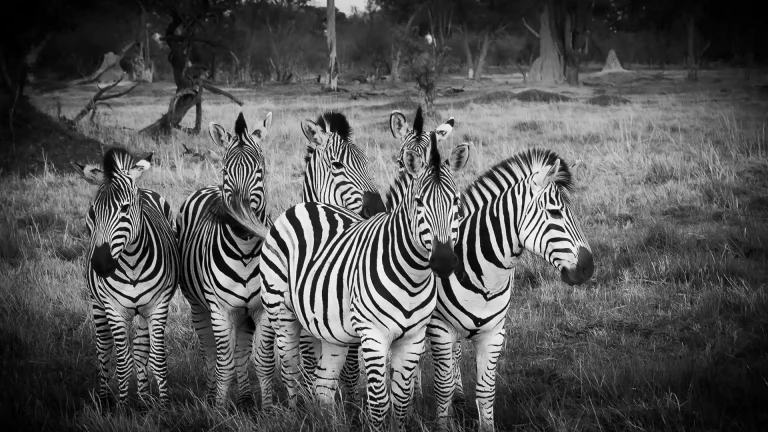
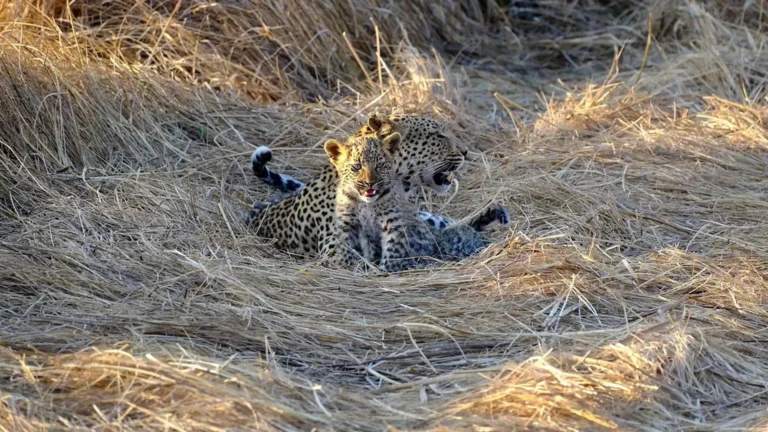
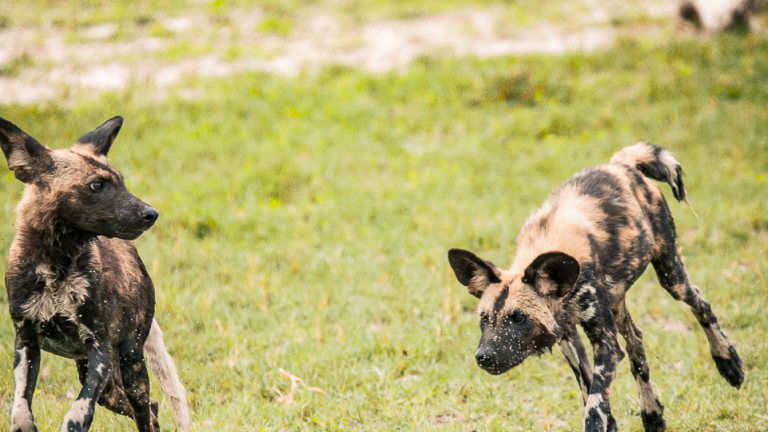
Khwai is renowned for daytime leopard sightings 1-2 per drive due to low hunting pressure and wild dogs denning May–July for extended pup play sessions. Moremi’s Chief’s Island hosts cheetah coalitions on open grasslands, while Linyanti’s lagoons concentrate 500+ hippos and draw lion prides for dramatic buffalo confrontations. Zebra herds numbering 10,000+ traverse the Savuti Channel during dry season migrations.
Mobile safaris here support exceptional photographic flexibility: early roll-outs before Moremi’s 6 AM gate openings, extended sessions at active dens, and off-road allowances enabling low, close up shots without disturbing subjects. Vehicle limits enforce 4-per-sighting protocols throughout.
Composition opportunities abound:
The Makgadikgadi salt pans and Central Kalahari Game Reserve form Botswana’s arid core 28,000 and 52,800 square kilometres respectively offering stark, cinematic backdrops unlike any other safari destinations on the African continent.
Headline photographic subjects:

Creative opportunities multiply in this vast wilderness. Long-exposure Milky Way arcs over solitary baobabs under Bortle Class 1 skies produce stunning images impossible near permanent lodges. High-contrast golden light dust storms with springbok pronking, thunderstorm compositions where lightning illuminates giraffe silhouettes the varied landscapes reward patience and preparation.
Mobile camps on pan margins enable pre-dawn silhouettes and post-sunset astrophotography far from light pollution. Green season (January–March) maximises wet-pan reflections and migratory spectacles; dry season (June–October) yields crisp desert portraits with a breathtaking backdrop of endless horizon.
Itinerary design for photographers differs fundamentally from standard safari planning. Sequencing regions around light, animal movements, and logistics rather than sightseeing variety determines portfolio outcomes.
Recommended circuit structure (8-12 days minimum):
| Region | Nights | Primary Focus |
|---|---|---|
| Okavango Delta | 3-4 | Predators, elephants, aquatic species |
| Khwai/Moremi | 2-3 | Wild dogs, leopards, big cats |
| Chobe/Linyanti | 2-3 | Elephant herds, river crossings |
| Makgadikgadi (optional) | 2 | Desert landscapes, meerkats |
Shorter trips of 5-6 nights confine photographers to one ecosystem, reducing image variety by 40-50% according to guide feedback.
Key planning considerations:
Booking timeline: Peak-season photographic camps fill 9-12 months ahead, especially July–October. Concessions like Vumbura Plains limit 12-16 guests per camp, with costs averaging $1,500-2,500/night all-inclusive. Securing your dream safari requires early commitment.
While Botswana represents the ideal mobile photographic safari base, photographers often evaluate alternatives when planning multi-year projects across diverse wildlife.
Kenya’s Masai Mara and Amboseli deliver the great migration’s river crossings (July–September) with 1.5 million wildebeest, plus elephants framed against Mount Kilimanjaro. However, 30-50 vehicles per lion sighting congest frames significantly. The Mara River crossings produce dramatic scenes, but achieving clean compositions requires luck and aggressive positioning.
Tanzania’s Serengeti and Ngorongoro Crater offer migration river crossings and extraordinary crater density for big cats. Yet off-road driving and night-drive restrictions in core national parks limit creative variety. Dense forests in areas like Bwindi Impenetrable National Park support gorilla trekking, but require separate itineraries from traditional savanna photography.
South Africa’s Sabi Sands and Kruger National Park excel in leopard sightings daily averages of 3-5 across private game reserves with luxurious accommodations and accessibility from Johannesburg. However, denser lodge networks (over 50 properties in Sabi Sands alone) erode the vast wilderness immersion Botswana provides. Madikwe Safari destinations in Southern Africa offer similar trade-offs.
Namibia’s Etosha and Sossusvlei deliver graphic, high-contrast desert imagery elephants at waterholes, the iconic Dead Vlei compositions but generally lack the seamless multi-ecosystem mobility that defines Botswana’s circuits.
These destinations remain excellent for specific photographic goals. But for 2026, Pangolin Photo Safaris and expert consensus rank Botswana first for diverse wildlife, citing 95% client satisfaction for “clean” photographic opportunities versus 70% in East Africa due to traffic.
Botswana’s varied environments boat trips, vehicle drives, walking, desert expeditions demand a focused but versatile gear kit rather than excessive equipment weighing down your safari experience.
Core gear recommendations:
| Category | Recommendation |
|---|---|
| Bodies | Two weather-sealed full-frame cameras (e.g., Canon R5, Nikon Z9) |
| Telephoto | 100-400mm f/5.6 or 200-600mm for big cats and other wildlife |
| Standard zoom | 24-105mm for landscapes, camp life, environmental context |
| Teleconverter | 1.4x for additional reach |
| Storage | 512GB CFexpress cards (minimum 10), RAID external backup |
| Support | Beanbags for vehicles; avoid tripods |
Botswana-specific considerations: Silica-gel pouches and zipped covers protect against fine Kalahari dust. Dry bags safeguard equipment during Okavango mokoro splashes. Polarising filters cut glare on salt crusts and water surfaces.
Skill priorities: Back-button autofocus for subject tracking. Shooting at 1/2000s minimum for moving subjects. Anticipating animal behaviour elephant trunk showers, wild dogs before a hunt.
Working RAW histograms for dawn/dusk exposure recovery. Specialist Botswana guides offer in-field tuition on vehicle choreography for rim light and post-processing for high-ISO noise reduction elevating amateur outputs toward professional standards.

Serious photographers should aim for 8-12 days on the ground in Botswana, excluding international travel days, to cover at least two contrasting regions such as the Okavango plus Chobe or Kalahari. Trips shorter than 6 nights often force rushed transfers and limit opportunities to wait out quiet wildlife days, reducing portfolio diversity substantially. A tour leader experienced in photography will confirm that patience yields results.
Botswana is exceptionally suitable for beginners because vehicle density remains low, sightings feel less rushed, and guides have time to assist with camera settings and composition. First-timers should consider shoulder seasons (May–June or November) when pricing softens slightly but diverse wildlife remains excellent and without the dense forests or challenging conditions of destinations like mountain gorillas habitats.
June–October represents the most versatile window, with peak Delta floods, strong predator activity, and large elephant herds along the Chobe River where animals gathered at water create incredible backdrops. Photographers interested in storms, green backdrops, and migrating zebra should consider green season (December–March), particularly around the Makgadikgadi and Kalahari for wildebeest migration spectacles.
Modern Botswana mobile camps offer large walk-in tents, proper beds, flushing toilets or eco-loos, and hot bucket showers more “bush boutique” than basic camping, with stunning settings amid the wilderness. While Wi-Fi is rare and décor simpler than ultra-luxury lodges, the trade-off is location flexibility, better access to remote areas, and a quieter, more immersive experience far from crowded safari destinations.
Combination itineraries are possible for example, Botswana plus Victoria Falls or Namibia’s Sossusvlei but each additional country increases flight time and budget by approximately 30%. Photographers with 10-12 days or fewer should focus on Botswana alone to maximise photographic time and reduce complex transfers. The diverse range of ecosystems within Botswana’s borders typically provides sufficient variety for even the most ambitious photography safari portfolio.