Ready to Capture the Wild?
From expert-guided game drives to exclusive wilderness locations, every moment is designed for extraordinary wildlife encounters.

A mobile safari is an immersive way to explore Botswana, with a safari camp that moves between wildlife-rich areas as your journey progresses. Discover how mobile safaris work, what camp life is like and what to expect when travelling through destinations such as Moremi, Khwai and Savuti.

A mobile safari is a guided camping safari where guests travel between different wildlife areas while a dedicated safari crew moves and sets up camp along the route.
Unlike a lodge safari, where you return to the same permanent accommodation each day, a mobile safari allows you to explore several destinations during one journey.
In Botswana, this can mean travelling through wildlife-rich areas such as Moremi Game Reserve, Khwai, Savuti and Chobe, spending several nights exploring each area before continuing to the next destination.
Guests travel with a professional safari guide while a dedicated camp crew takes care of tents, meals and camp logistics.
The result is an immersive safari experience that combines the adventure of camping in Botswana’s wilderness with the comfort of a fully serviced camp.

A mobile safari moves through a planned itinerary rather than operating from one permanent lodge.
Importantly, this does not necessarily mean moving camp every day.
On many Botswana mobile safaris, guests spend several nights in one wildlife area before travelling to the next destination.
Your guide accompanies you throughout the safari and leads your game-viewing activities.
Much of your day is spent exploring Botswana’s wilderness by safari vehicle, searching for wildlife and learning about animal behaviour, habitats and the wider ecosystem.
For photographers, having the same guide throughout the journey can also help create a more consistent approach to wildlife viewing and photography.
Rather than rushing through destinations, a mobile safari can allow several nights to explore an area.
This gives you time to understand the landscape, follow wildlife activity and experience how the bush changes throughout the day.
A fully serviced mobile safari does not require guests to set up and dismantle their own tents.
The camp crew takes care of camp operations, including accommodation, meals, water and other essential logistics.
This leaves you free to concentrate on the safari experience.
After exploring one area, the safari continues to the next destination on the itinerary.
This ability to combine several wildlife areas is one of the defining characteristics of a mobile safari.
A single journey might take you from the wetlands and floodplains of Moremi and Khwai to the drier landscapes of Savuti and Chobe.
Mobile safari camps are designed to provide an authentic wilderness experience while still taking care of essential comforts.
The exact setup varies by safari, but a fully serviced mobile camp can include comfortable tented accommodation, meals and a dedicated safari team.
Instead of staying in a permanent lodge, you sleep in a temporary tented camp established in the wilderness.
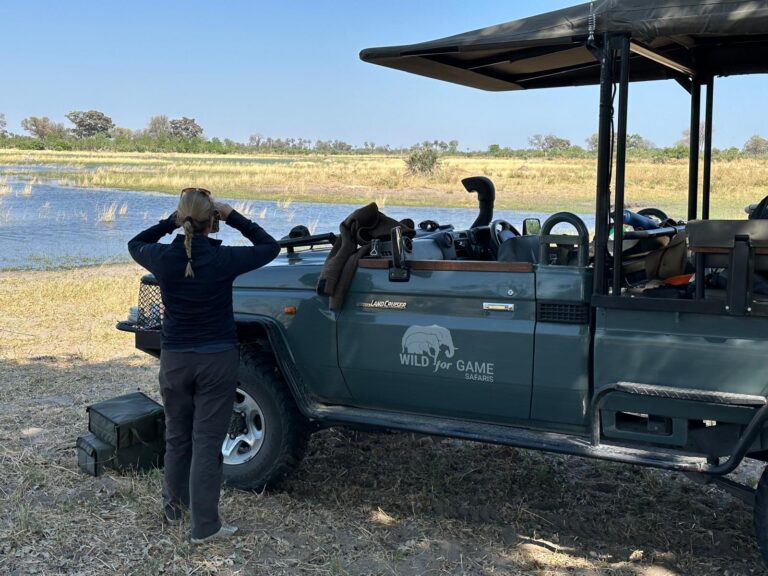
At Wild For Game Safaris, the mobile camping experience is designed to give guests a comfortable base between game drives while maintaining a strong connection with the surrounding bush.
Depending on the safari setup, accommodation can include:
At night, the experience is very different from staying in a conventional hotel.
You may hear lions calling in the distance, elephants moving through the surrounding area or nocturnal wildlife becoming active after dark.
That connection with the wilderness is a major part of the mobile safari experience.
Your professional guide is one of the most important parts of a mobile safari.
A guide does much more than drive the safari vehicle.
Guiding involves reading tracks, understanding animal behaviour, interpreting the landscape and making responsible decisions about how to approach and spend time at wildlife sightings.
For guests interested in photography, guiding can also play an important role in vehicle positioning, anticipating animal movement and finding opportunities to photograph behaviour rather than simply seeing an animal.
While you are out exploring, the camp team takes care of the practical side of safari life.
Depending on the safari, this can include:
A fully serviced mobile safari therefore gives you the adventure of camping without requiring you to spend your safari setting up tents and managing camp logistics yourself.

Every safari is different because wildlife doesn’t operate according to a timetable.
However, a typical day often begins early.
The day may start before sunrise with coffee or tea before heading out on a morning game drive.
Early mornings are particularly rewarding because temperatures are cooler, wildlife is often active and photographers can work with softer morning light.
Your guide explores the surrounding wildlife area, looking for tracks, listening for alarm calls and responding to what is happening in the bush.
A morning drive may produce anything from elephants and antelope to lions, leopards, African wild dogs or smaller species that are easily overlooked.
Wildlife sightings can never be guaranteed.
After the morning activity, you return to camp for a meal and time to relax.
The warmer part of the day provides an opportunity to rest, review photographs, charge equipment where facilities allow, or simply enjoy being in camp.
Later in the day, you head back into the wilderness.
As temperatures fall, wildlife activity can increase again and the afternoon light can create excellent conditions for photography.
After returning to camp, evenings are often spent enjoying dinner and the atmosphere of the bush.
Without the distractions of city life, simply sitting beneath Botswana’s night sky and listening to the surrounding wilderness becomes part of the experience.
Both mobile safaris and lodge safaris can provide excellent wildlife experiences, but they offer different styles of travel.
| Mobile Safari | Lodge Safari | |
| Accommodation | Temporary tented camp | Permanent lodge or camp |
| Location | Moves between selected safari areas | Fixed location |
| Destinations | Can combine several areas in one itinerary | Usually centred around the lodge’s surrounding area |
| Experience | Strong wilderness immersion | Lodge-based safari experience |
| Facilities | Comfortable but generally simpler | Often more extensive |
| Camp logistics | Managed by the mobile safari crew | Managed by permanent lodge staff |
| Best suited to | Travellers wanting an immersive journey through multiple areas | Travellers who prefer a permanent base and lodge amenities |
Neither approach is automatically better.
The right choice depends on how you want to experience Botswana.
For a deeper comparison, read our guide to luxury mobile camping vs safari lodges in Botswana.
Not every mobile safari follows exactly the same format.
On a fully serviced safari, the crew handles the camp setup, meals and day-to-day logistics.
Guests can concentrate on wildlife viewing and enjoying the journey.
Some operators offer participatory camping safaris where guests help with aspects of camp life.
These can provide a different type of adventure and may suit travellers looking for a more hands-on camping experience.
A private safari gives your travelling party its own safari experience rather than joining a larger scheduled group.
This can be particularly valuable for families, groups of friends and photographers who prefer greater privacy.
Scheduled small-group departures allow guests to share the experience with other travellers while maintaining the intimate character associated with mobile camping.
A photographic mobile safari places greater emphasis on the needs of wildlife photographers.

The experience may prioritise time at sightings, wildlife behaviour, light, positioning and destinations with strong photographic potential.
Learn more about what a photographic safari is and how it differs from a conventional safari.
Botswana is particularly well suited to mobile safaris because its major wildlife areas offer dramatically different habitats within the same country.
A well-designed itinerary can move from wetlands and floodplains to woodland, grassland and semi-arid environments.
Moremi lies within the wider Okavango Delta ecosystem and combines floodplains, woodland, lagoons and seasonal waterways.
Its variety of habitats supports a wide range of wildlife and makes it an important destination for wildlife photography.
Khwai sits along the northern edge of Moremi and is known for varied habitats and strong wildlife viewing.
The combination of woodland, floodplains and riverine environments makes it particularly interesting for photographers and safari travellers.
Savuti offers a striking contrast to the wetter Delta environments.
Its open landscapes and predator activity have made the area one of northern Botswana’s best-known safari destinations.
Lions, elephants, spotted hyenas and other wildlife can all form part of the Savuti experience.
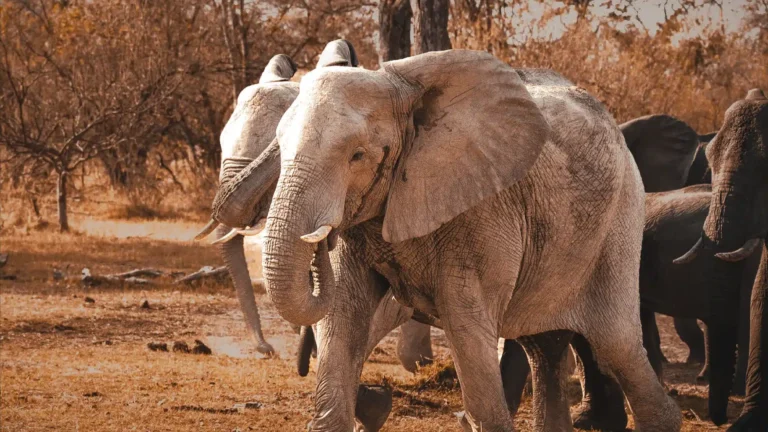
Chobe is particularly famous for its elephants and river-based ecosystem.

Combining Chobe with Moremi, Khwai and Savuti can create a diverse northern Botswana journey covering several very different wildlife environments.
Mobile safaris are not limited to northern Botswana.
The Central Kalahari offers vast landscapes, desert-adapted wildlife and a completely different photographic environment from the Okavango Delta.
This makes it possible to build Botswana itineraries that showcase both wetland and desert ecosystems.
Mobile safaris and wildlife photography work particularly well together because both benefit from time, patience and access to varied habitats.
Good wildlife photography is rarely about rushing from one animal to another.
Interesting images often come from staying with a sighting long enough to observe behaviour and anticipate what might happen next.
Moving between destinations gives photographers access to a wider variety of landscapes.
One safari might include Delta floodplains, mopane woodland, open grasslands and drier Kalahari environments.
This creates greater visual variety in both wildlife and landscape photography.
Safari activities commonly take place during the cooler morning and afternoon periods, which can also provide attractive natural light for photography.
Private and small-group safaris can make it easier to consider photographers’ needs when positioning the vehicle at a sighting.
A guide who understands wildlife behaviour can help photographers anticipate movement and recognise opportunities for interesting images while ensuring that wildlife is approached responsibly.
Explore our Botswana photographic safaris to see how photography is incorporated into our safari experiences.
Some of the main reasons travellers choose mobile safaris include:
If you’re deciding whether this style of safari is right for you, read our detailed guide on why you should choose a mobile safari in Botswana.
Packing light is generally important on safari, particularly when your itinerary includes transfers between several destinations.
Useful items can include:
Your exact requirements will depend on the season and itinerary.
See our complete Botswana safari packing guide before travelling.
A mobile safari may be a good choice if you want to experience several parts of Botswana rather than staying at one permanent lodge.
It can be particularly suitable for travellers who value:
A sense of adventure without managing camp logistics themselves
However, travellers who prioritise extensive lodge facilities, permanent structures or resort-style amenities may prefer a lodge-based safari.
Understanding the difference before booking helps you choose the experience that matches your expectations.
Wild For Game Safaris specialises in immersive camping-style photographic safaris through Botswana.
Our itineraries explore some of the country’s most rewarding wildlife areas, allowing guests to experience different landscapes and ecosystems while travelling with professional guides and a dedicated safari team.
Depending on the itinerary, your journey can include destinations such as Moremi Game Reserve, Khwai, Savuti, Chobe, the Okavango Delta and the Central Kalahari.
Explore our Botswana photographic safaris and find the journey that best matches the wildlife and landscapes you want to experience.
A mobile safari is a guided camping safari that travels between different wildlife areas rather than operating from one permanent lodge. A safari crew manages the camp while guests explore each destination with a professional guide.
Guests follow a planned safari itinerary through several wildlife areas. They generally spend multiple nights exploring each destination before moving to the next area, while the safari team handles camp and logistical arrangements.
Not necessarily. On many Botswana mobile safaris, guests spend several nights in each wildlife area before the camp relocates to the next destination on the itinerary.
Not on a fully serviced mobile safari. A dedicated camp crew handles the setup and operation of the camp. Participatory camping safaris are a separate style in which guests may assist with camp activities.
Comfort varies by operator and safari style. Fully serviced mobile camps can provide proper beds, linen, en-suite bush bathrooms and hot-water bucket showers while maintaining an authentic camping experience.
A lodge safari uses permanent accommodation as a base, while a mobile safari moves between selected wildlife areas during the itinerary. Mobile safaris therefore make it possible to experience several destinations as part of one continuous journey.
Mobile safaris operated by experienced professional teams are designed around guest safety in wildlife areas. Guests should always follow their guide’s instructions, particularly around camp and during wildlife encounters.
They can be particularly well suited to wildlife photography because they combine multiple habitats with extensive time in wildlife areas. Private and photography-focused safaris can also give guides greater scope to consider light, positioning and time at sightings.
The wildlife depends on the destination, season and natural animal movements. Depending on the itinerary, guests may encounter elephants, lions, leopards, African wild dogs, spotted hyenas, buffalo, antelope and a wide variety of birds. Wildlife sightings are always natural and cannot be guaranteed.
Moremi Game Reserve, Khwai, Savuti, Chobe and the Central Kalahari are among the areas that can be incorporated into Botswana mobile safari itineraries. The best combination depends on the season, length of safari and the type of wildlife experience you want.
Mobile safaris can range from shorter trips to journeys lasting more than a week. Longer itineraries make it possible to spend more time in each area and combine several Botswana ecosystems.
Pack light, practical clothing suitable for warm days and cool mornings, together with sun protection, comfortable shoes, binoculars, personal medication and photography equipment if required. Always check the luggage requirements for your specific itinerary.
A mobile safari is about more than changing camps.
It is a way of travelling through Botswana’s wilderness rather than experiencing it from a single base.
By combining professional guiding, fully serviced tented camping and multiple wildlife destinations, a mobile safari gives you the opportunity to experience how Botswana’s landscapes and wildlife change as the journey unfolds.
If that sounds like the safari you’re looking for, explore our Botswana photographic safaris or contact Wild For Game Safaris to start planning your journey.