Ready to Capture the Wild?
From expert-guided game drives to exclusive wilderness locations, every moment is designed for extraordinary wildlife encounters.

A Botswana mobile safari takes you deeper into the wilderness, moving between wildlife-rich destinations such as Moremi, Khwai and Savuti. Discover how mobile camping works, what to expect and why it offers photographers and safari travellers a more immersive way to experience Botswana.

A mobile safari places you inside the African wilderness rather than viewing it from a comfortable remove.
Unlike fixed lodges, this approach moves your entire camp every two to three nights, following wildlife across Botswana’s national parks and private reserves. The result is a safari experience built around nature’s rhythms rather than hotel schedules.
A mobile safari is a guided African safari where your camp moves every 2–3 nights between remote sites, typically within Botswana’s key areas like the Okavango Delta, Moremi Game Reserve, Chobe National Park, and Savuti. Guests sleep in spacious walk in tents at temporary camps, while a professional safari crew handles all camp setup, campfire cooking, and logistics.
The difference from lodge safaris is fundamental: mobile moves with the wildlife; permanent lodges anchor you to a single location for your stay’s duration. A typical multi-stop route spans 7–10 days following a logical loop Maun to Moremi, then Khwai, potentially Savuti, and ending at Chobe Riverfront. Each stop delivers distinct ecosystems without backtracking.
Mobile safaris usually include private or semi-private 4×4 vehicles, a dedicated professional guide, and small groups of 6–8 guests. This structure creates intimate, personalised game drives where the experience is often tailored to the specific interests of your group.
Your safari trip follows natural rhythms. Pre-dawn coffee arrives at your tent around 5:30–6:00 AM. Early mornings bring the best wildlife activity, so a light breakfast precedes 3–4 hour game drives through prime viewing time, with coffee stops near waterholes.
Midday brings return to camp for brunch, bucket showers with heated water, and rest in camp chairs or hammocks. Walking safaris operate where regulations permit, offering a different sensory experience on foot through the bush.
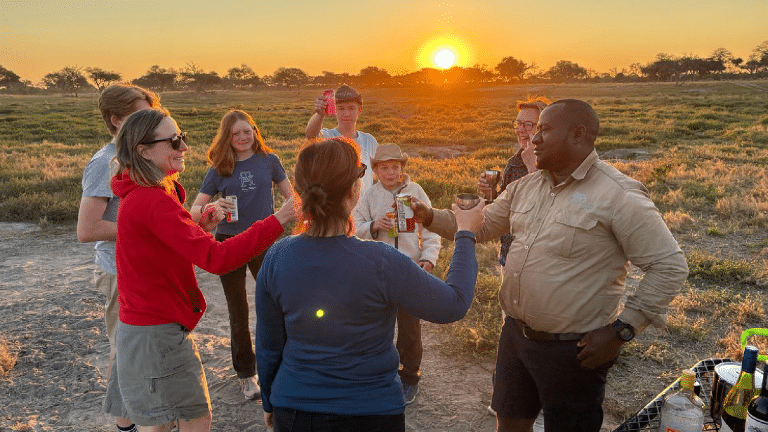
Afternoons begin with tea and homemade cake before late-afternoon drives. Sundowners on open plains or riverbanks give way to dinner cooked over an open fire. Evenings around the campfire under the Milky Way provide opportunities for deeper conversation with safari guides about animal behaviour and ecology.
On moving day, you pack soft bags after breakfast and drive slowly through diverse landscapes spotting wildlife en route. Upon arrival, the camp crew has your tent and a welcoming drink already prepared at your new mobile safari camp.
Lodge safaris offer comfort and established routines. Yet many travellers now deliberately choose mobile camping safaris for a deeper connection to the African wilderness.
Mobility vs. fixed base: Mobile safaris can adapt to seasonal wildlife movements, enabling guests to follow animal migrations and experience multiple regions in one trip. Lodge safaris keep you exploring the same concession throughout.
Privacy and exclusivity: Mobile safaris often provide exclusive access to remote, secluded areas away from busy tourist routes. Mobile camps often operate in private or low-density areas, providing a more secluded and raw experience compared to busy lodge locations.
Proximity to nature: Sleeping under canvas allows for a deeper connection to the environment—you experience natural sounds and sights throughout the night instead of air-conditioned corridors.
Value proposition: Mobile safaris can offer better value for money by avoiding the heavy overheads of permanent infrastructure and expensive chartered flights. Budget redirects toward guiding quality and actual time on safari rather than infrastructure costs.
The flexibility of mobile safaris allows guests to follow wildlife migrations and explore diverse landscapes, adapting the itinerary based on recent animal sightings rather than fixed schedules.
Mobile camping does not mean roughing it. The spectrum runs from classic mobile camps to luxury mobile safaris with fine-dining standards.
Classic mobile camps feature Meru or Sahara-style tents approximately 3–4 metres wide with proper beds, quality bed linen and duvets, oil or solar lamps, and open-air en suite bathrooms with hot bucket showers.
Luxury mobile camps provide king-size beds, higher tent ceilings, solar power for device charging, flush-style toilets, gourmet meals, and often complimentary drinks. While mobile camping safaris are sometimes perceived as less comfortable than lodge safaris due to the lack of amenities like air conditioning, premium mobile camps are designed to provide a high level of comfort, including attentive staff.
Group size remains limited regardless of comfort tier—most quality operations cap departures at 6–10 guests. This maintains quiet sightings and personalised guiding that creature comforts alone cannot replicate.
Mobility matters because animals in Botswana move with water, grazing, and seasonal changes. Mobile safari itineraries are designed around wildlife patterns rather than fixed infrastructure, allowing for greater personalization and flexibility in daily activities and routes.
Concrete examples: following elephant herds along the Chobe Riverfront in the dry season, searching for wild dogs in Khwai Community Concession, tracking lions across Savuti Marsh, or spotting sitatunga and lechwe in Okavango floodplains during peak flood.
Mobile safaris provide access to remote and exclusive areas, allowing for fewer vehicles at wildlife sightings and a stronger sense of isolation and wilderness. This means more time observing animal behaviour rather than jockeying for position among a crowd.
Activity variety extends beyond standard game drives possible night drives, mokoro canoe excursions in seasonally flooded channels, and guided walks where regulations permit. Because temporary camps can relocate, guides design routes maximising wildlife opportunities during your specific travel month.
A well-run mobile safari is inherently eco friendly. Mobile safari camps are designed to leave no permanent footprint, which helps protect the natural environment and aligns with sustainable travel goals.
Low-impact practices include no concrete foundations, limited water use, bucket or low-flush toilets, and carefully managed campfires fully extinguished each night. Many mobile safari camps utilize solar power and eco-friendly products, further reducing environmental impact.
Mobile camps are designed to adhere to “leave no trace” principles. The camp crew dismantles everything at departure, removes all rubbish, and restores the campsite so future visitors see minimal evidence of human presence.
These operations typically function under strict national park and concession rules in Botswana, paying conservation fees directly supporting protected areas and local communities. Temporary mobile camps prioritize conservation and minimize human impact on the environment when managed responsibly.
Mobile safaris are not universal. Choosing between mobile and lodge depends on travel style, fitness, and comfort expectations.
Ideal candidates: Travellers who value adventure and immersion, photographers wanting flexibility and extended field hours, families or friends seeking shared wilderness experiences, and repeat safari-goers seeking something more authentic than permanent lodges offer.
Key considerations: Tolerance for canvas walls instead of brick, acceptance of en suite bathrooms with bucket showers, early starts around 5:30 AM, limited or absent Wi-Fi and mobile reception in remote areas.
Adaptations: Older travellers, children, or guests with health considerations can enjoy mobile safaris by choosing more comfortable setups, shorter routes, or partial lodge-mobile combinations.
Planning timeline: Book Botswana mobile safaris at least 8–12 months ahead for peak dry season (June–October) when demand for prime routes is highest.
Pack smart rather than heavy. Light aircraft transfers enforce strict luggage limits—typically 15–20 kg in soft bags.
Clothing: Neutral earth-tone layers for game drives; warm jackets, hats, and gloves for cold winter mornings (June–August temperatures can drop to 5–10°C); lightweight shirts and trousers for hot afternoons; a rain layer for shoulder seasons.
Essential gear: Sturdy closed shoes for walks, sandals for camp, quality headlamp, high-SPF sunscreen, brimmed hat, sunglasses, personal medications, camera or binoculars.
Tech and power: Bring a portable battery pack—mobile camps offer limited charging. Embrace the digital detox; weak or absent signal is part of the journey into wilderness.
Admin prep: Travel insurance covering remote evacuation, up-to-date vaccinations, malaria prophylaxis advice for northern Botswana, tipping guidelines in USD, and disclosure of dietary or medical needs before travel.
Seven to ten days represents the ideal length for a Botswana safari circuit, allowing time to visit at least two or three distinct areas—Moremi Game Reserve, Khwai, and Chobe, for example—without feeling rushed. Shorter trips of 4–5 days work when combined with a lodge stay, while serious wildlife enthusiasts and photographers often opt for 12–14 days across drylands and wetlands.
Reputable operators use experienced guides following strict safety protocols around wild animals, camp layout, and night-time movement. Many mobile camps accept children above 8–12 years depending on the operator. Private departures work best for families, allowing customized pace, activities, and routines suited to younger travellers.
The classic peak season runs from June to October dry, cooler months when floodwaters are high, vegetation thinner, and animals concentrate around permanent water. The green season from November to March offers dramatic skies, baby animals, and fewer visitors, attracting photographers and repeat travellers comfortable with some rain.
Most mobile camps rely on solar power, providing limited charging options in central areas or sometimes tents, but not continuous electricity. Wi-Fi is typically unavailable, and mobile reception ranges from patchy to absent. Frame this as opportunity an authentic African adventure focused on the world around you rather than modern life’s digital demands.
Mobile safari operators pay park and concession fees funding anti-poaching, habitat protection, and national park management. Many employ staff from nearby villages, purchase supplies locally, and partner with community-managed conservancies. Each mobile safari directly contributes to livelihoods and long-term conservation outcomes across Africa’s protected areas.