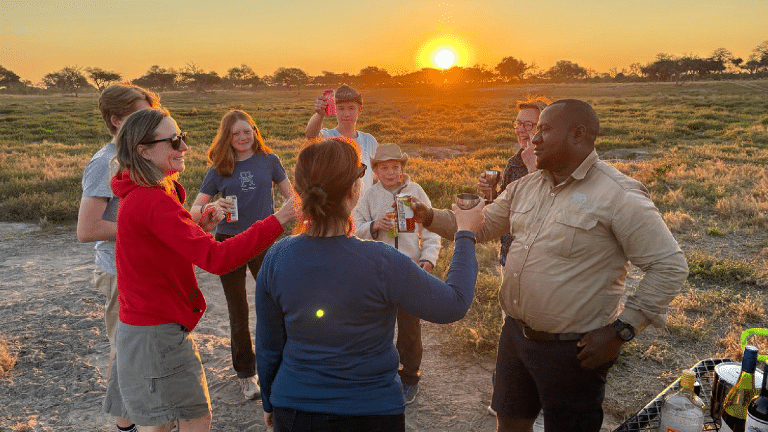
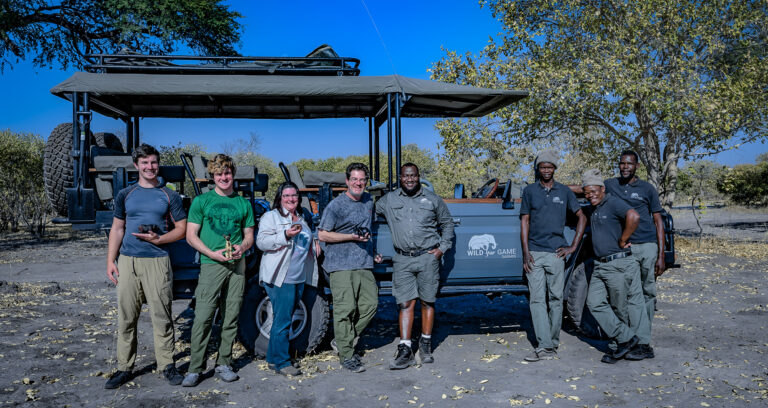
Ready to Capture the Wild?
From expert-guided game drives to exclusive wilderness locations, every moment is designed for extraordinary wildlife encounters.

Plan a Botswana safari around the experiences that matter to you. Compare seasons, destinations, costs and routes, with practical advice for a fully serviced mobile safari.
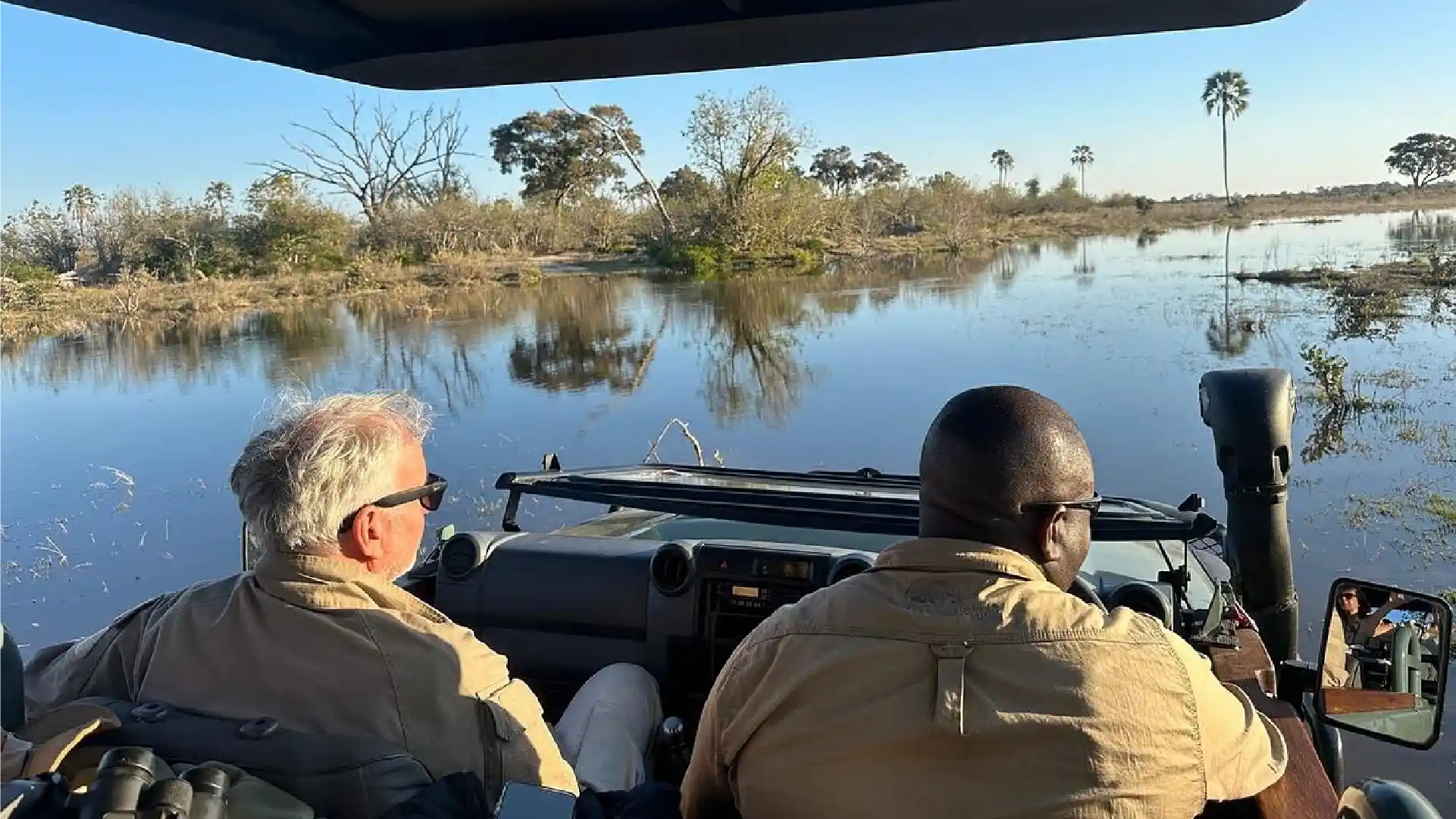
A Botswana safari can take you from the waterways of the Okavango Delta to the floodplains of Moremi, the open landscapes of Savuti and the elephant herds along the Chobe River. Each area offers a different way to experience the wilderness.
Planning safari trips to Botswana means deciding how to bring those places together. Your travel dates, budget, camp choice and time in each destination all shape the safari you will have.
For photographers and travellers who enjoy watching animal behaviour, it helps to plan around time in the field. A few well-chosen locations give you room to follow a sighting, return to an area and notice more of what is happening around you.
This Botswana safari guide explains when to travel, how to compare tours and packages, where to go and how to plan your itinerary. It also introduces the fully serviced mobile photographic safaris we offer at Wild For Game Safaris.
| Planning decision | A useful starting point |
|---|---|
| How long to stay | Allow 7–10 nights for a first safari, concentrating on two or three areas. |
| When to travel | Consider May–October for northern Botswana game viewing, or the green season for different landscapes and wildlife interests. |
| Where to start | Maun for Moremi and the Okavango; Kasane for the Chobe Riverfront. |
| Which safari style | Compare fully serviced mobile camping, permanent camps and guided or self-drive travel. |
| What to prioritise | Choose your main interests first: predators, elephants, birdlife, water activities, photography or desert landscapes. |
Build in time for arrival, transfers and unhurried game drives.
May to October is generally a strong starting point for wildlife viewing in northern Botswana. As conditions become drier, animals gather around remaining water and thinning vegetation can make them easier to see, which is why this is often treated as the high season and, in many areas, the peak season.

However, the best time to visit Botswana for a safari depends on what you want to experience. Summer rains bring different opportunities, particularly for birdwatching, green landscapes and the Kalahari and pans after good rainfall, while the low season can also mean lower rates despite high demand at some camps and for top guides.
| Travel period | What to expect | Planning considerations |
|---|---|---|
| November–March | Summer heat, rain, green vegetation, birdlife and young animals; the rainy season usually runs from late December to mid-April, and many operators class this as when low season runs. | Wildlife may be more dispersed; some tracks become difficult after rain. |
| April–May | A transition towards drier conditions. | A useful period to compare availability and rates; local conditions vary. |
| June–August | Generally dry weather with cold early mornings. | Pack warm layers for open vehicles and ask about water activities at your chosen camp. |
| September–October | Increasing heat and dry conditions in northern wildlife areas, and October is often the hottest month in Botswana. | Plan for hot afternoons, especially later in the season. |
These are broad weather patterns. The start and end of the rains vary, and each operator sets its own pricing seasons. The Botswana Tourism Organisation’s seasonal guidance is a useful starting point when comparing experiences.
The Okavango’s annual flood reaches the Delta during Botswana’s dry season. This is one of the characteristics that makes the UNESCO-listed Okavango Delta so distinctive.
Water levels vary between locations and years. A dry month does not necessarily mean low water in the Delta. Confirm the expected activity mix for your travel dates.
Botswana safari costs span a wide range: basic group safaris with camping start at about $300 per adult per day, mid-range trips are typically around $650 per adult per day, and a luxury option can be around $1,300 per person per day, with overall prices running from roughly $300 to $7,000 per night depending on dates, route, accommodation, flights and the driver guide.
Entry-level safari lodges can start around $800 per night, while top-end safari experience pricing rises much higher depending on exclusivity, private activities and other inclusions.
Compare the full itinerary price and its inclusions. A daily mobile safari package, a lodge’s nightly rate and a self-drive vehicle rental cover different things, and self-drive vehicle rental alone is often about $150 to $200 per day before fuel, park fees and food.
Travelling outside an operator’s busiest pricing period, choosing fewer transfers or sharing a departure can change the total. Compare those choices with the wildlife experience and comfort you want, then price the complete route. Botswana is often pricier than Tanzania because many camps are remote, tourism is positioned at the upscale end, and guides are highly trained.
Keep international travel, insurance, any applicable visa costs and personal spending in your overall budget. For a private safari, ask how the total changes with the number of people travelling.
Read our Botswana safari cost guide for more detail, then request a quotation for your actual route and dates. Review what is included in your safari alongside the inclusions specified in that quotation.
Safari style affects how you travel between places, what camp feels like and how much of the logistics you handle yourself, shaping both the safari experience and your budget.
A mobile safari uses temporary camps at planned locations along your route. On a fully serviced trip, the team handles camp setup, cooking, food and the move to the next booked campsite while you travel with your guide.

At Wild For Game Safaris, our accommodation includes beds, linen, towels and private en-suite bathrooms. A professional driver guide, chef and camp assistants support the journey, and fully serviced trips rely on highly trained staff.
This style suits travellers who want to stay close to the wilderness while exploring several areas with a consistent guiding team. Your camp moves between booked sites, creating a continuous journey through the different landscapes.
For a closer look at the tents, meals and evenings, read what a mobile safari camp is like.
Permanent camps provide a fixed base for exploring the surrounding area. Many are small by design for fewer visitors, and Botswana rules require lodges to use eco-friendly materials rather than large-scale hotels. Facilities differ: one may offer a simple tented experience, while another has a pool, larger suites or additional services, especially at remote lodges.
Choose the location and available activities alongside the accommodation. A water-focused Delta camp can offer a different daily experience from a camp built around game drives.
On a participation safari, guests may help with tasks such as putting up tents. These are a type of group safaris, so confirm what participation means for the trip you are considering and how it differs from a fully serviced departure.
Self-drive travel gives you responsibility for navigation, supplies, bookings and vehicle recovery. Botswana Tourism’s self-drive camping guidance highlights the preparation needed for remote areas, rough terrain and deep sand, and you should also budget for basics such as food alongside vehicle and campsite costs.
If you prefer to spend your time observing and photographing wildlife, a guided trip removes much of that logistical work.
Choose destinations for the experiences they add to your trip. Botswana, in southern Africa, is about the size of France, so choosing fewer, well-matched destinations usually makes more sense. Moremi and the wider Okavango are part of the same ecosystem, while Savuti and the Chobe Riverfront are different parts of Chobe National Park in Africa.
The Delta combines permanent wetlands with areas that flood seasonally. Fed by the okavango river, whose floodwaters arrive from Angola and spread into the Delta instead of reaching the sea, it changes character through the year. Depending on the camp and conditions, you may explore by game vehicle, boat or mokoro, the traditional canoe associated with the region.
For photography, it offers a change of perspective: reflections, birds among the reeds, animals moving across floodplains and wider landscape compositions.
Decide whether you want a water-focused stay or a combination of land and water activities. Some remote camps require light-aircraft access, and flights are often used to reach some of the most remote lodges; other parts of the wider Okavango system can form part of an overland safari.
Explore our Okavango Delta safari destination guide.
Moremi protects part of the central and eastern Okavango and stands out as a strong conservation area. Its mix of woodland, open areas, lagoons and floodplains creates opportunities to look for elephants, buffalo, lions, cheetahs, leopards and African wild dogs.

That habitat variety makes it a useful starting point for a northern Botswana itinerary, and one of better places in Africa to look for leopard. A morning in one area can feel quite different from an afternoon elsewhere in the reserve.
Consider three or four nights if Moremi is a main focus. This gives you time for repeated drives without making every day a transfer day.
Learn more about Moremi Game Reserve.
The Khwai area borders Moremi. Its river, floodplains and woodland make it a natural continuation of a Moremi safari, with opportunities to explore changing habitats along the route.
The community concession is distinct from the official reserve. Some concession-based itineraries can include activities such as a game drive and night drives, which can reveal nocturnal wildlife in private or community concession areas, subject to operating permissions and local conditions.
Khwai works well when you want to continue exploring the Okavango region without adding an entirely different part of Botswana. Confirm the campsite location and activities when comparing itineraries.
Savuti lies within Chobe National Park and brings a different landscape to a route through Moremi and Khwai. Open areas, woodland, rocky hills and changing water conditions shape the experience.
The region is associated with lions, elephants and spotted hyenas. It also gives photographers opportunities to place wildlife within a wider landscape.
Several nights give you time to revisit areas and watch how wildlife activity changes.
See our Savuti photographic safari guide.
The Chobe Riverfront is accessible from Kasane and combines game drives with boat-based wildlife viewing. It is known for its elephant herds, buffalo, hippos and waterbirds.
A river excursion adds a different viewpoint after several days in a vehicle. Ask about the boat layout and passenger numbers if photography is a priority.
The Riverfront can be busy, particularly at popular sightings and times of year, and it tends to attract more other travellers than the quieter camps deeper in the Delta or desert regions. Discuss the timing of your drives and boat excursions with your guide.
Read our Chobe National Park guide.
The Central Kalahari offers open pans, grassland, dry river valleys and large skies, and the Kalahari Desert covers a vast area of Botswana, which helps explain the scale, sense of space and semi-desert character here. Wildlife interests include gemsbok, springbok and Kalahari lions.
After good summer rains, the landscape can change considerably, making this a different seasonal proposition from a dry-season northern circuit. It also suits travellers interested in landscape photography, a slower search for wildlife across a vast area, and a closer connection to nature. Some itineraries also include walks with local San guides for cultural insight, depending on area and operator.
Plan it as a deliberate part of the journey, with adequate transfer time. Explore our Central Kalahari safari guide.
These neighbouring areas offer contrasting scenes. Makgadikgadi is associated with broad salt pans, the seasonal zebra migration and surrounding grasslands, and the Makgadikgadi Pans are among the largest salt flats in the world; Nxai Pan includes grassed pans, acacia trees and the Baines’ Baobabs area in this semi-desert setting.
Season matters. Rain can bring fresh grazing and seasonal wildlife movements, while dry conditions suit different pan experiences. Meerkat visits, quad biking and sleep-outs are specific activities offered in particular locations, rather than standard inclusions throughout the region.
Our Nxai Pan National Park guide explains one option for adding this landscape to your safari.
For a first trip, seven to ten nights, or roughly a 7–10 day itinerary once arrival and departure days are counted, is a useful starting point. A shorter trip can still work well if you focus on fewer destinations. Photographers may prefer to spend longer in the same area.
These are illustrative route frameworks, not fixed departures. Campsite availability, seasonal access, flight connections and your arrival time determine the final plan. On some itineraries, flights between remote areas can shorten long overland transfers.
| Trip length | Example route and nights | Why consider it? |
|---|---|---|
| 7 nights / 8 days | Moremi: 4 nights; Khwai: 3 nights | Time to explore two neighbouring areas with less frequent camp movement. |
| 9 nights / 10 days | Moremi: 3 nights; Khwai: 3 nights; Savuti: 3 nights | Adds a different landscape while allowing several nights in each place. |
| 12 nights / 13 days | Moremi: 3 nights; Khwai: 3 nights; Savuti: 3 nights; Chobe Riverfront: 3 nights | A longer northern journey ending near Kasane, with a river safari component. |
The final day in each example is reserved for the safari’s exit transfer. For the route ending in Savuti, agree on the onward gateway and allow a gateway overnight if needed for your flight connection. Nights in Maun or Kasane before or after the safari extend the total trip.
Road journeys through wildlife areas can be slow because of terrain, conditions and stops. They can include game viewing, but a transfer day still reduces the time available to explore around camp.
Ask for the expected travel time and activity plan on every moving day. A route that looks short on a map may take much of the day on the ground.
For actual itineraries, explore our Delta Miracle Safari for Moremi and Khwai, or our Northern Explore Safari for a wider northern journey.
A Victoria Falls extension can follow a safari ending near Kasane. Allow additional nights, transfer time and the relevant border arrangements instead of squeezing it into the safari days above.
When comparing Botswana safari packages, look beyond the headline price. Two trips with the same number of days can offer different amounts of time in the wildlife areas, and comparisons with destinations such as Tanzania can be misleading unless the accommodation style, internal transport and guiding standard are similar.
| What to compare | A useful question to ask |
|---|---|
| Route and pace | How many nights will we spend in each area, and how much of each moving day is a transfer? |
| Accommodation | What are the tents, beds and bathroom facilities like? |
| Price basis | Is the price per person sharing, and are there single supplements? |
| Inclusions | Are meals, drinks, park fees, camping fees, specified activities and each flight or road transfer included? |
| Guiding | Who will guide us, and will we travel with the same guide throughout the safari? |
On a private Botswana safari, confirm whether the vehicle and guide are exclusive to your party. This can make it easier to plan around your family, pace or photographic interests. On a shared departure, ask about group size and how the daily programme accommodates different interests.
Ask Botswana safari operators to explain how their proposed route fits your priorities. For a wildlife safari in Botswana, the time spent observing animals and the quality of the guiding deserve as much attention as the camp photographs.
You can compare our Botswana safari tours and discuss which route best suits your dates and interests.
Game drives provide the foundation for many itineraries, and a typical day may pair a morning game drive with lunch and downtime at camp before afternoon game drives. Other activities add different perspectives, but their availability depends on where you stay, the season and the operator’s permissions.
| Activity | What it adds | What to confirm |
|---|---|---|
| Game drives | Wildlife observation across different habitats on a shared or private game drive. | Vehicle arrangements, group size and time in the field. |
| Mokoro excursions | A quiet, low viewpoint for waterways, birds and smaller details. | Water levels, location, age restrictions and inclusion in the itinerary. |
| Boat safaris | River and channel scenery, waterbirds and wildlife near the water. | Boat type, passenger numbers and seasonal operation. |
| Guided walks | Tracks, plants and a closer understanding of the landscape; in the right areas, some are cultural walks with local San guides. | The permitted area, qualified guiding and suitability for your group. |
| Night drives | Opportunities to observe nocturnal species under the vast earth and stars. | Concession permissions and whether the activity is included. |
Night drives and off-road viewing are generally not permitted in official national parks and game reserves. Some private and community concessions offer additional activities under their own rules and permissions. Botswana Tourism explains this distinction in its game-viewing guidance.
For cultural experiences, ask who leads the visit and how the community benefits, as some are offered as walks with local San guides. Let hosts explain their own knowledge and traditions, ask how these are organised and who benefits, and seek permission before photographing people.
For a photographic safari, the most useful questions concern your time, guide and vehicle arrangements.
Give yourself time to stay with a sighting when conditions allow. Watching an animal settle, interact or move through its surroundings can offer a different photograph from arriving, taking a quick image and leaving.
Tell your guide what interests you: bird behaviour, predators, wider scenes, portraits or learning to use your camera. It helps to discuss those priorities before your route is finalised.
Check how many people share the vehicle, what shooting positions are available and whether equipment support is provided. Ask specifically about beanbags, charging and space for your camera bag instead of assuming that every photographic safari uses the same setup.
If you want technical tuition, confirm that it is part of the guiding service. Strong wildlife guiding and a formal photography workshop are different offerings.
Prepare for early departures and changing light. Carry spare batteries, sufficient memory cards and a practical way to protect your equipment from dust or spray.
Use longer stays to build variety: animal behaviour, habitat, small details, camp life and the people guiding your journey. You do not need every photograph to be a close-up of a predator.
Maun is a common starting point for Moremi and the Okavango, while Kasane serves the Chobe Riverfront. Plan international connections around the confirmed safari start and finish arrangements, as many visitors reach Botswana via Johannesburg in South Africa, with some routes also connecting through Zimbabwe or Zambia on longer southern Africa itineraries that may include neighbouring Namibia to the west or camps farther south.
If your itinerary uses light aircraft, obtain the carrier’s baggage allowance before packing. Check the weight, dimensions, bag type and whether camera equipment counts towards the total.
Bring lightweight clothing, a warm layer for cold mornings, comfortable closed shoes, a sunhat, sunscreen and appropriate insect repellent. Add personal medication, binoculars and the equipment needed for your photography.
Ask about laundry and charging before deciding how much to carry. Our Botswana safari packing guide provides a fuller checklist.
Arrange a travel-health consultation before departure, ideally at least four to six weeks ahead. Discuss your route, vaccination needs and malaria prevention. Risk varies by location, season and individual circumstances; NaTHNaC’s Botswana guidance provides country-specific information to discuss with your clinician.
Check entry requirements for your nationality and every country on your route, including any documents needed when travelling with children. Choose insurance that covers your planned activities and medical evacuation from remote areas, and consider the cover needed for your camera equipment.
Share mobility requirements, dietary needs and other practical concerns before booking. Ask about steps into vehicles, bathroom arrangements and the walking distances within camp.
During the safari, follow your guide’s instructions, keep a respectful distance from wildlife and avoid pressuring the guide for a closer photograph. Ask how the operator manages waste and water and supports local employment or community projects.
Yes. Start with a guided itinerary, manageable transfers and accommodation that suits your comfort needs. Two or three well-chosen areas can provide a varied introduction without making the trip feel rushed.
For popular travel periods or a private group, start planning around nine to twelve months ahead, as Botswana’s high season often needs the longest booking lead time and peak season can book up fastest. Shorter-notice travel may work if your dates and route are flexible.
Family safaris are possible, but suitability depends on the itinerary, accommodation and children’s ages. Ask about activity restrictions, travel-day length, sleeping arrangements and whether a private vehicle would help your family travel comfortably.
Moremi and the wider Okavango are areas to consider if African wild dogs are a priority. Share the animals and behaviours that interest you so we can discuss suitable locations and travel dates. Sightings remain unpredictable, and seeing all of the Big Five should not be assumed for every itinerary.
No. Choose equipment you are comfortable carrying and using. Tell us whether you use a phone, a compact camera or interchangeable lenses, and what you would like to photograph. If you want lessons or specialist support, discuss those needs before booking.
Connectivity varies, and many remote areas have limited mobile reception. Confirm the communications arrangements for your itinerary. Wild For Game Safaris provides charging systems in its safari vehicles; check that they suit your equipment and bring spare batteries.
A well-planned safari gives you time to appreciate the place you are travelling through: the changing habitats, the behaviour at a sighting and the quieter moments back in camp.
Our fully serviced mobile photographic safaris bring together guiding, camp support and routes through Botswana’s wildlife areas. Wild For Game Safaris can help tailor the safari experience around the time you have and the wildlife or photographic priorities discussed with guests.
Tell us your preferred travel dates, number of guests, available days and main wildlife or photographic interests.
Or explore our Botswana safari itineraries to find a starting point for your trip.