Ready to Capture the Wild?
From expert-guided game drives to exclusive wilderness locations, every moment is designed for extraordinary wildlife encounters.

Explore the habitat, behavior, and unique characteristics of the cheetah. Discover what makes this incredible animal thrive in the wild. Read more now!

The cheetah occupies a unique niche among Earth’s predators, an animal sculpted by the demands of unparalleled speed. Every aspect of its biology, behavior, and survival hinges on razor-thin margins, where a single missed meal or disrupted habitat corridor can have profound consequences.
This article provides an in-depth exploration of the cheetah’s biology, geographic range, behavior, threats, and conservation status, revealing why safeguarding this extraordinary species is critical not only for the savannas it inhabits but for global biodiversity and ecosystem health.
The cheetah, classified as Acinonyx jubatus, is the fastest land animal alive today. With fewer than roughly 7,000 adult cheetahs remaining in the wild, the species occupies a precarious position iconic in speed, fragile in numbers.
A cheetah is a large, slender cat built almost entirely around one evolutionary principle: acceleration. Adult cheetahs can reach speeds of 96 to 114 km/h in short bursts, with some field measurements recording sprints approaching 104 km/h across open ground. That acceleration is extraordinary, going from a standstill to approximately 96.5 km/h in under three seconds rivaling the launch performance of high-end sports cars.
However, the fastest land mammal pays a steep physiological price for that speed. A full sprint lasts only about 20 to 30 seconds, covering 200 to 300 meters before the animal must stop or risk dangerous overheating.
Among the most important cheetah facts to understand: the scientific name Acinonyx jubatus reflects the animal’s unusual semi-fixed claws and the crest-like mane of juvenile fur. An average adult weighs between 35 and 65 kg and stands 70 to 90 cm at the shoulder.
The core range today lies in eastern and southern Africa, with scattered populations across the continent’s savannas and semi-arid landscapes. A critically endangered remnant, the Asiatic cheetah, survives only in central Iran, where recent surveys have identified as few as 27 individuals.
Globally, the IUCN Red List classifies the species as Vulnerable, though certain cheetah subspecies carry far more dire designations.
Cheetahs hunt mostly small to medium antelopes gazelles, impalas, springbok relying on explosive pursuit rather than ambush. Cheetah cubs face some of the harshest early-life odds of any large predator: in ecosystems dense with competing carnivores, cub mortality can exceed 90% before the age of three months. These numbers underscore why conservation efforts are not optional but urgent.
Ecologically, cheetahs help regulate prey populations and maintain the structure of grassland and savanna systems. Symbolically, they function as a flagship for global wildlife conservation their speed, beauty, and vulnerability distill the tensions between human development and the wild systems that sustain it.
The sections below explore every dimension of this relationship: from the animal’s deep evolutionary past to the strategic choices that will determine its future.
The cheetah is the sole living member of the genus Acinonyx, set apart from the roaring big cats of the genus Panthera by anatomy, genetics, and behaviour.
Where lions, tigers, and leopards share a lineage of power and ambush, the cheetah followed a radically different evolutionary path one defined by pursuit. In the broader context of Africa’s big cats and their shared landscapes, this section traces the naming, taxonomy, evolutionary divergence, and genetic legacy that make it unlike any other cat species alive today.
The common name “cheetah” comes from the Hindi and Urdu word chītā, meaning “spotted one,” itself rooted in the Sanskrit chitraka. The genus name Acinonyx combines Greek roots meaning “motionless claw,” a reference to the animal’s unusual, partially fixed claws that cannot fully retract. The species name jubatus is Latin for “crested” or “maned,” describing the silvery dorsal mantle that young cubs wear a feature that fades as they mature.
In the 18th century, the species was first formally described as Felis jubatus by the naturalist Schreber. It was later separated into its own genus, Acinonyx, in 1828, after zoologists recognized that its claws, body proportions, and running adaptations placed it well outside the norms of other cat species.
Modern molecular analysis situates the cheetah within the so-called “puma lineage,” placing it alongside the cougar (Puma concolor) and the jaguarundi (Herpailurus yagouaroundi) a grouping that may surprise readers who associate cheetahs with African big cats. The divergence between cheetahs and these relatives occurred roughly 6 to 8 million years ago.
Fossil evidence reveals cheetah-like cats in Africa and Eurasia dating back 3 to 4 million years. Among the extinct relatives was the so-called “giant cheetah,” Acinonyx pardinensis, a larger but slower animal that ranged across Pleistocene Europe. The modern cheetah, as we know it, emerged from this lineage in Africa, shaped by the open landscapes and fast-moving prey that demanded ever-greater speed.
What marks the modern cheetah most deeply, however, is what happened to its numbers not once, but twice. The species endured at least two severe genetic bottlenecks: one approximately 100,000 years ago and another around 10,000 to 12,000 years ago, following the last Ice Age.
These population crashes killed off most genetic variation, leaving today’s cheetah populations with remarkably low genetic diversity. The consequences are tangible: reduced fertility, high rates of sperm abnormality in adult males, and heightened susceptibility to disease.
In practical terms, most cats within the species are so genetically similar that skin grafts between unrelated cheetahs show little immune rejection—an extraordinary and troubling indicator of uniformity.
One striking expression of the limited remaining genetic variation is the king cheetah. King cheetahs display dramatically enlarged, blotchy patches and elongated stripes in place of the typical small spots. For decades, they were thought to be a separate species.
They are not.
The pattern results from a mutation in the Taqpep gene, occurring infrequently in certain southern African cheetah populations. It is a reminder that even within a species shaped by uniformity, nature still produces rare and beautiful variation.
Stand a cheetah beside any other large African predator and the difference is immediate: a narrow, almost greyhound-like frame, a deep chest tapering to a thin waist, long legs set beneath a small, rounded head, and two distinctive black “tear lines” running from the inner corner of each eye down to the sides of the mouth. Everything about the animal’s proportions communicates a single design purpose rapid, straight-line pursuit.
Typical adult cheetahs weigh between 35 and 65 kg (roughly 75 to 140 lb), with males marginally heavier than adult females, particularly those living in coalitions where competition for territory favors bulk. Shoulder height ranges from 70 to 90 cm. Body length, excluding the tail, runs approximately 110 to 150 cm, with the tail adding another 60 to 80 cm.
That long tail is not decorative it acts as a stabilizing rudder during high-speed turns, counterbalancing the body’s momentum as the animal adjusts direction at velocities that would cause most cats to tumble.
The coat is tawny to pale gold, covered in roughly 2,000 to 3,000 solid black spots each pattern unique to the individual, much like a fingerprint. Unlike leopards, whose markings form rosettes (clusters of spots around a lighter center), cheetah spots are simple, round, and evenly distributed.
The tail carries several dark rings and ends in a variable tuft, often white, which may help young cubs track their mother through tall grass. Juveniles are born with a distinctive “mantle” of long, silvery-gray fur along the back and neck thought to mimic the appearance of a honey badger, an animal most predators avoid, thereby offering camouflage and deterrence during the most vulnerable weeks of life.
The anatomical adaptations that make the cheetah the fastest land mammal are precise and interconnected. A highly flexible spine compresses and extends with each stride, effectively lengthening the animal’s reach by allowing all four feet to leave the ground simultaneously twice per stride cycle.
Long, lightweight limbs and reduced bone mass minimize the energy cost of acceleration.
The skull is small relative to body size, with comparatively weak jaw muscles a clear tradeoff against other cats that rely on crushing bites. But what the skull lacks in power, it gains in airflow: enlarged nasal passages, oversized lungs, and an enlarged heart allow rapid oxygen intake during and after a sprint.
Cheetahs rely on semi-retractable claws that grip the ground like cleats on a sprinter’s shoe, and a strong dewclaw on the inner foreleg serves as a hook to trip prey at the moment of contact.
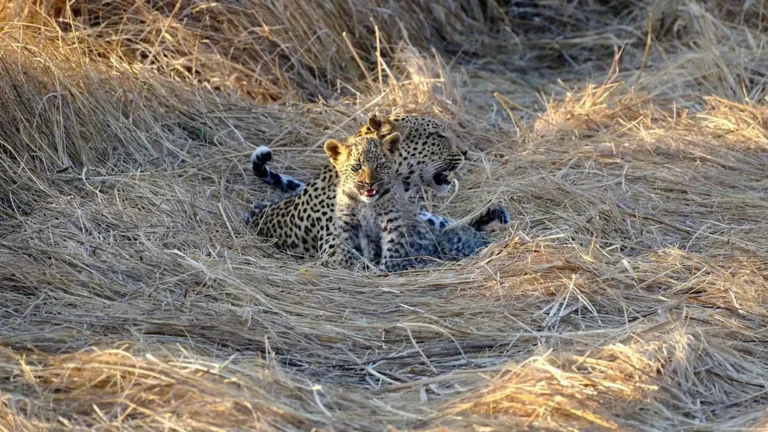
For readers who sometimes confuse cheetahs with African leopards (Panthera pardus) a common mistake given their shared African habitats the differences are fundamental. Leopards (classified as Panthera pardus) are heavier, more muscular, and built for ambush and power.
Their spots form rosettes rather than solid circles; they lack tear lines; and they possess the hyoid structure that enables roaring, something cheetahs cannot do. Cheetahs chirp, purr, and produce high-pitched yelps, vocalizations more reminiscent of a large bird than a large cat.
Where leopards drag kills into trees to protect them, cheetahs eat on the ground, quickly, and move on.
The two species occupy the same landscapes but fill different ecological roles, a distinction that becomes critical in conservation planning.
Cheetahs once ranged across nearly all of sub-Saharan Africa, through the Arabian Peninsula, into the Middle East, and as far east as India. That historical range has collapsed.
Today, cheetahs live across roughly 9 to 10 percent of their former territory, a contraction driven by habitat loss, agricultural conversion, and direct persecution over centuries.
The remaining strongholds are concentrated in southern Africa and eastern Africa. Namibia holds the largest single national population, followed by Botswana, South Africa, Kenya, Tanzania, Angola, Zambia, and Mozambique.
Smaller, fragmented groups persist in several other African countries and across parts of West and North Africa including areas bordering the Sahara Desert though these populations are small, isolated, and poorly monitored.
The Asiatic cheetah, the last surviving population east of Africa, clings to existence in the arid plateaus and hill deserts of central and eastern Iran. Estimates have fallen from roughly 82 individuals recorded in 2011–2013 to fewer than 50 by late 2017, with recent surveys identifying as few as 27 individuals including young cubs.
Preferred habitats are open grasslands, savannas, semi-desert expanses, and lightly scrubbed terrain where visibility extends far enough to spot prey and initiate pursuit.
Cheetahs avoid dense forest and heavy bush they need sightlines. Some populations, particularly in Iran, occupy hilly desert landscapes at elevations up to 2,000 to 3,000 meters, adapting to terrain that bears little resemblance to the classic East African plains.
Density is strikingly low. Where lions may concentrate around water or prey aggregations, wild cheetahs spread thinly often fewer than 3 adult cheetahs per 100 square kilometers, and sometimes far less.
This sparse distribution makes them especially sensitive to habitat fragmentation, because even a moderate reduction in contiguous range can isolate small groups beyond the threshold of viability.
Space use follows a clear pattern shaped by sex. Female home ranges are large and overlapping, shifting with seasonal prey migrations and the availability of denning cover.
Male territories are smaller but more actively defended, especially among coalitions that anchor themselves near high-prey zones or key travel corridors. These spatial dynamics mean that cheetah conservation cannot be confined to fenced reserves the animals require landscape-scale connectivity to maintain gene flow and access to shifting resources.
An estimated 67 percent of the global cheetah population ranges outside formal protected areas, on land shared with farming, herding, and expanding human populations. The overlap between cheetah movement corridors and human land use makes human-wildlife conflict not an occasional friction but a defining pressure on the species.
The cheetah’s daily life revolves around a set of constraints no other large African predator faces quite so sharply: the need to hunt in daylight, the inability to defend kills from stronger competitors, and the enormous investment required to bring young cubs to independence.
Cheetahs are primarily diurnal, concentrating their hunting activity in early morning and late afternoon when light is strong enough to spot prey but temperatures have not yet peaked.
This daytime hunting schedule is partly a strategy of avoidance: by hunting when nocturnal predators such as lions and spotted hyenas are least active, cheetahs reduce the risk of direct confrontation with animals that outweigh and overpower them.
It is a form of temporal niche separation effective, but it means cheetahs tend to operate in a narrower activity window than most cats.
Social structure among cheetahs is unusually flexible for a large cat. Female cheetahs are generally solitary, except when raising cubs. Adult females maintain large, overlapping home ranges, and young females typically establish territories that overlap with their mother’s range. Female siblings may associate briefly after leaving their mother but usually separate to live alone.
Male cheetahs follow a different pattern: adult males are either solitary floaters roaming widely without fixed territory or members of small coalitions, most often pairs or trios of brothers. Coalitions of unrelated males also form, though less commonly, particularly when a male lacks siblings.
These coalitions hold and defend territories with greater success than solitary males, and they enjoy measurably higher hunting and mating success. When a female is in estrus, her scent markings and calls attract males from across the surrounding landscape.
The hunt itself is the defining behaviour of the species. Cheetahs hunt by first spotting prey from an elevated point or through patient scanning, then stalking through low vegetation or open ground to close within 60 to 100 meters. At that range, the chase begins an explosive sprint of acceleration, sharp directional changes, and a final lunge.
Hunting cheetahs use the strong dewclaw on the inner foreleg to trip prey species at high speed, then clamp down with a suffocating bite to the throat.
The entire sequence rarely lasts more than 20 to 30 seconds. Common targets include gazelles, impalas, springbok, and occasionally larger prey such as young wildebeest or smaller warthogs. Cheetahs also take ground-dwelling birds and hares when opportunity arises.
Once a kill is made, the clock starts. Cheetahs eat quickly they must, because cheetahs lose a significant proportion of their kills to other predators. Lions, spotted hyenas, and even vultures (whose circling draws attention to a fresh carcass) all represent threats.
Cheetahs rarely scavenge, relying almost entirely on live prey they catch themselves. Livestock predation does occur, particularly when natural prey is depleted by drought, overhunting, or competition with domestic herds, but it remains comparatively rare.
Among African predators, cheetahs are responsible for a far smaller share of livestock losses than lions or leopards a point often lost in the retaliation that follows any perceived threat to herds.
Reproduction follows a demanding timeline. Gestation lasts approximately 90 to 93 days, after which a female gives birth to an average of three to five cubs, occasionally as few as one or as many as six to eight, though large litters are rare.
Cubs born into the wild weigh roughly 400 grams and arrive with eyes closed, dependent, and wearing the cryptic mantle that may help them blend into cover or mimic less-palatable species. The mother moves her den site frequently sometimes every few days to reduce the scent trail that could lead other predators to her young cubs.
Cub mortality is the single most brutal statistic in the cheetah’s life history. In predator-rich ecosystems like the Serengeti, as many as 90 percent of cheetah cubs die before reaching three months. Lions, hyenas, and even eagles take young cubs with alarming regularity.
In landscapes with fewer competing predators certain farmlands in Namibia, for instance survival to 14 months may rise to around 70 percent. The difference is stark and has profound implications for where conservation resources are directed.
Both males and females mate with multiple partners. Cubs within a single litter can have different fathers, adding a thin layer of genetic mixing to an already limited gene pool. Young males typically leave their natal group together, forming the sibling coalitions that will define their adult social lives.
Young females, by contrast, tend to disperse less dramatically, settling into ranges near their mother’s territory. Independence arrives at roughly 18 to 20 months, and sexual maturity at 18 to 23 months—a relatively rapid cycle for a large predator, but one offset by the appalling early attrition that cheetahs face in every generation.
The cheetah is classified as Vulnerable at the global level, but that designation masks severe variation.
Some cheetah subspecies including the Asiatic cheetah (A. j. venaticus) and the Northwest African cheetah (A. j. hecki)—are classified as critically endangered, with populations so small that a single bad year could push them toward functional extinction.
The species’ decline is driven not by one factor but by a convergence of human-caused pressures that interact and amplify each other.
Habitat loss and fragmentation remain the primary threat. Across Africa and the Middle East, conversion of savannas and grasslands to farmland, settlements, and fenced ranching operations has broken apart the large, contiguous landscapes that cheetahs require.
Roads and infrastructure bisect movement corridors. Figures indicate that more than three-quarters of the current cheetah range lies outside formal protected areas, placing wild cheetahs directly in the path of expanding human populations and agricultural development.
The species’ low density and wide-ranging behaviour mean that even modest fragmentation can isolate groups below viable breeding thresholds.
Human-wildlife conflict is the most immediate cause of death in many areas. When wild prey declines through overhunting, livestock competition for grazing, or drought cheetahs tend to shift toward livestock, triggering retaliation.
Farmers in both Africa and Iran kill cheetahs pre-emptively or in response to perceived losses, sometimes using poison, traps, or dogs.
The fear of livestock predation often exceeds the actual damage: studies consistently show that cheetahs account for a small fraction of total livestock losses compared to other threats, yet the emotional and economic weight of any single loss in a subsistence economy is enough to sustain lethal retaliation.
This dynamic persists across most operating environments where cheetahs share space with rural communities.
Wild prey decline compounds the problem. Overhunting of antelope for bushmeat, competition between natural prey and domestic livestock for grazing, and drought-driven habitat degradation all reduce the prey base on which cheetahs depend.
Without sufficient density of natural prey, cheetahs cannot meet their energetic needs, reproductive success drops, and the likelihood of conflict with herders increases. It is a feedback loop that accelerates decline.
The illegal wildlife trade represents a distinct and growing threat. Capture of cheetah cubs for the exotic pet trade particularly flowing from eastern Africa into Gulf states removes young animals from already small wild populations, with devastating mortality during transport.
Cubs sold as exotic pets rarely survive long in captivity, and those that do are permanently removed from the breeding population. Poaching for skins persists in some regions.
The combination of illegal wildlife trade and habitat pressure means that live cheetahs are being extracted from ecosystems that cannot afford to lose a single breeding individual. The species’ status as an endangered species under CITES Appendix I provides legal framework, but enforcement varies dramatically across African countries.
Additional threats compound the picture. Vehicle collisions on expanding road networks a particularly acute problem in Iran, where highways cut through cheetah corridors cause direct mortality.
Disease risks, amplified by the species’ low genetic diversity, mean that a single pathogen introduction can sweep through populations with limited immune variation. And climate change, by altering precipitation patterns, grassland cover, and drought frequency, threatens the long-term quality and distribution of habitat for both cheetahs and their prey.
For a species already stretched to its margins, these compounding pressures leave little room for error.
Protecting the cheetah an endangered big cat that ranges across millions of square kilometers, mostly outside formal reserves demands a conservation model that operates at landscape scale, integrates with working lands, and secures buy-in from rural communities.
Organizations like the Cheetah Conservation Fund, headquartered in Namibia, and cross-border initiatives under the Central Asian Mammals Initiative have been central in pioneering this approach.
Range-wide conservation frameworks provide the scaffolding. The IUCN Red List classification, CITES Appendix I listing, and inclusion in regional agreements like the CMS Central Asian Mammals Initiative all create legal obligations and cooperative structures across national borders.
Because cheetah populations move across political boundaries, conservation efforts that stop at a single country’s border are inherently incomplete. Collaborative planning shared monitoring, synchronized anti-poaching efforts, harmonized land-use policies is not aspirational but necessary.
Specific country examples illustrate the range of approaches. India’s reintroduction of African cheetahs to Kuno National Park in the 2020s represents one of the boldest experiments in large-carnivore translocation, though results remain mixed and closely watched.
In a recent and significant development, cheetahs sourced from Botswana have been introduced as part of India’s ongoing efforts to restore this iconic species to its former range. This translocation aims to establish a viable wild population in suitable habitats, with careful monitoring to assess adaptation and breeding success.
In Iran, the Conservation of Asiatic Cheetah Project relaunched in September 2025 after years of interruption includes population monitoring, speed-limit campaigns on roads crossing critical corridors, and community engagement in protected area management. Several nations in southern and eastern Africa have developed national cheetah action plans that coordinate habitat protection, anti-poaching operations, and corridor planning across jurisdictions.
Community-based approaches have proven among the most effective tools. In Namibia and other parts of eastern and southern Africa, programs distributing livestock guarding dogs (breeds like Anatolian shepherds that bond with herds and deter predators) have measurably reduced livestock losses and, with them, retaliatory killings.
Improved kraal and corral designs, predator-proof fencing around vulnerable enclosures, and compensation or insurance schemes for verified losses all reduce the economic sting of coexistence. These strategies don’t just protect cheetahs they make farming in predator landscapes more viable, reducing a source of chronic tension.
Science and technology underpin these strategies. GPS and radio telemetry map movement patterns and identify critical corridors. Camera trapping enables population estimates and individual identification without physical capture.
Genetic laboratories, including those operated by the Cheetah Conservation Fund, study the bottleneck legacy in detail assessing disease resistance, reproductive fitness, and the potential for assisted gene flow between isolated cheetah populations. Landscape-level modeling identifies where investment in corridor protection can have outsized impact, directing limited resources toward the highest-leverage interventions.
Cheetahs in captivity present a different set of challenges. Managed breeding programs in accredited zoos maintain studbooks and genetic records, but breeding success remains limited by low genetic diversity, sensitivity to stress, and the difficulty of simulating natural social dynamics.
Captive populations serve important functions research, public awareness, and genetic insurance but they are not a substitute for wild populations. Best practice in modern cheetah conservation keeps its focus firmly on protecting and restoring wild habitats and the connectivity between them.
A cheetah can reach speeds of up to 104 km/h (65 mph) in short bursts, accelerating from zero to nearly 97 km/h (60 mph) in under three seconds. However, these sprints last only about 20 to 30 seconds before the cheetah must rest.
Most wild cheetahs are found in eastern and southern Africa, with the largest population residing in southern African countries such as Namibia, Botswana, and South Africa. A critically endangered population, the Asiatic cheetah, survives only in central Iran.
Cheetahs face habitat loss, fragmentation, human-wildlife conflict, illegal wildlife trade, and prey depletion. Their low genetic diversity also makes them more vulnerable to disease and reproductive challenges.
Cheetahs have solid black spots, distinctive black tear marks from the eyes to the mouth, and semi-retractable claws for traction. Leopards have rosettes on their coats, can roar, and are more muscular and stronger but less fast.
Efforts include community-based programs, habitat protection, anti-poaching initiatives, transboundary cooperation, and captive breeding programs. Notable organizations like the Cheetah Conservation Fund lead research and education to support cheetah survival.