Ready to Capture the Wild?
From expert-guided game drives to exclusive wilderness locations, every moment is designed for extraordinary wildlife encounters.

Discover fascinating facts about spotted hyenas, nature's clever scavengers. Learn their role in the ecosystem and their unique social behaviors. Read more!

Spotted hyenas (Crocuta crocuta) are among Africa’s most intelligent and misunderstood predators. Far from being simple scavengers, they are skilled hunters that live in complex female-led clans, communicate through an impressive range of calls and possess powerful jaws capable of crushing bone.
Here are 10 fascinating spotted hyena facts that reveal what makes these remarkable African predators so successful.
The spotted hyena (Crocuta crocuta) belongs to the family Hyaenidae, which also includes the striped hyena (Hyaena hyaena) and the brown hyena (Parahyaena brunnea).
While all three species share certain physical and behavioral traits, the spotted hyena stands out as the largest and most ecologically successful member of the hyena family.
Although earlier taxonomic studies proposed several subspecies, most recent research recognizes only a single species, Crocuta crocuta, due to minimal genetic variation across its range.
Fossil evidence indicates that the spotted hyena evolved in Africa and has remained largely unchanged for millions of years, with the earliest fossils dating back to the Early Pleistocene.
This evolutionary stability highlights the species’ remarkable adaptability and success as a top African carnivore, closely related to but distinct from the striped and brown hyena.
Spotted hyenas are among the most adaptable wild animals in Africa, occupying a vast geographic range that stretches across sub-Saharan regions.
They thrive in diverse habitats, from the open savannas and grasslands of East Africa to the arid deserts of southern Africa and the woodlands of countries like South Africa, Namibia, Botswana, Zimbabwe, and Kenya. As terrestrial carnivores, spotted hyenas are well equipped for life on the ground, with powerful front legs and non-retractable claws that aid in running and hunting.
Their ability to live at various elevations from sea level plains to mountainous areas demonstrates their resilience and versatility. This adaptability has allowed hyena populations to persist in both protected national parks and more challenging, human-impacted landscapes.

The spotted hyena is the largest and most ecologically successful of the hyena species, which also include the striped hyena and brown hyena.
It has a body length ranging from 95 to 165.8 cm and is distinguished by its dark brown spots covering a sandy or grayish coat.
Unlike other hyena species, spotted hyenas have rounded ears and a more robust build. Their adaptability enables them to thrive across diverse habitats throughout sub-Saharan Africa, from savannas and grasslands to semi-arid deserts and woodlands.
This success is partly due to their versatile diet and social structure, which allows them to dominate other hyena species and maintain large clans of up to 130 individuals. Their ability to disperse and establish territories also contributes to their widespread presence and ecological importance.
Dominant females lead the matriarchal clans of spotted hyenas, with adult females being 10–15% heavier, larger, and more influential than males. Spotted hyenas live in complex social groups called clans, which can consist of up to 130 individuals.
Their social structure is similar to that of cercopithecine primates, with kinship, competition, and cooperation among clan members shaping a hierarchy maintained through aggression and alliances. This dominance by adult females influences access to food, mating opportunities, and social rank within clans.
Females possess a pseudo-penis and fused labia that resemble a scrotum, making them the only placental mammals without an external vaginal opening. This anatomy complicates mating and birth, requiring precise positioning from males and making parturition risky.
Spotted hyenas live in groups called clans, also known as spotted hyena clans, which are highly organized social units that can include up to 100 individuals and are structured by a strict female-led hierarchy.
Individuals within the same clan maintain stable membership, with females typically remaining in their natal clan for life, reinforcing matrilineal rank and kinship ties.
Cubs inherit ranks directly below their mothers, and low-ranking females’ offspring can outrank high-ranking males. Communal dens are used by multiple females for raising cubs and serve as central hubs for social interactions within the clan.
These clans exhibit a fission-fusion social structure, with members often foraging alone or in small groups before regrouping for hunting or territory defense.
Their powerful jaws allow them to crush bones, a unique adaptation among carnivores. Their jaws generate one of the strongest bite forces among terrestrial carnivores, capable of exerting over 1,100 PSI. Their broad toe pads and strong hind legs contribute to their ability to feed on carcasses and move efficiently.
This allows them to consume nearly every part of a carcass, including bones, hooves, and skin. By crushing bones, hyenas recycle nutrients back into the environment through their calcium-rich feces, and their ability to digest bones allows them to access nutrient-rich marrow, making them a crucial part of the food web in their habitats.
Spotted hyenas are skilled hunters and successful hunters, targeting a variety of prey species.
They hunt medium to large prey such as wildebeest, zebra, and gazelles by chasing them at speeds up to 60 km/h over long distances. When alone or in small groups, they also pursue smaller prey such as ground birds, rabbits, and fish.
They often target young, old, or weak individuals but can also take down healthy adults, especially when hunting in groups. Hyenas frequently make direct kills and play a crucial role as apex predators by hunting weaker individuals, which helps maintain the health of their ecosystems.
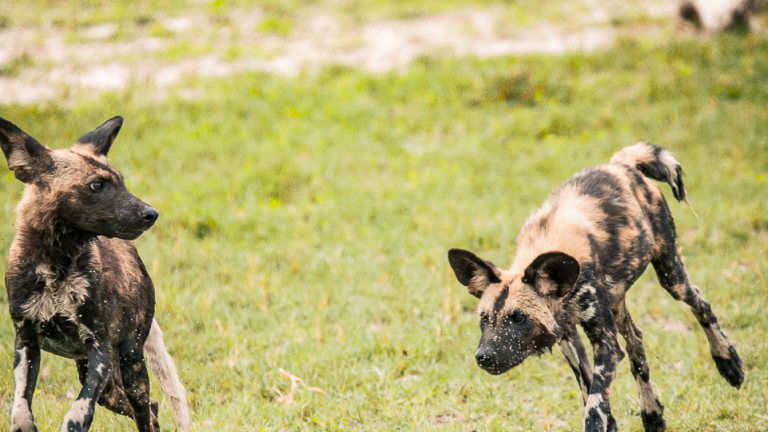
Wild dogs sometimes compete with hyenas for food, leading to complex interactions between these predators.
The gestation period for spotted hyenas is about 110 days, and females usually give birth to two cubs, though litters can range from one to four. Each mother nurses her own cubs in the den. Hyena cubs are born precocial, with their eyes open, teeth intact, and weighing between 1 to 1.6 kg.
Hyena milk is the richest of any terrestrial carnivore, with high fat and protein content. Cubs nurse for 12–16 months an extended nursing period unique among terrestrial carnivores though they can start processing solid food as early as three months.
Sibling rivalry sometimes leads to neonatal siblicide, ensuring survival of the strongest cubs. Adult spotted hyenas provide prolonged maternal care, and each mother is solely responsible for her own cubs without paternal assistance.
Spotted hyena calls include over 11 distinct sounds, with some spotted hyena a study suggesting there may be as many as 28 different vocalizations. The famous “laugh” of the spotted hyena is often an expression of social anxiety or uncertainty, rather than amusement.
Their “whoop” call can be heard for miles and is used for long-range communication, helping to identify individual hyenas.
These vocalizations play a key role in animal behaviour, especially in interactions with neighboring clans and other clans, and are central to the social dynamics of spotted hyena clans.
They also use scent marking with anal and foot gland secretions to delineate territories and recognize clan members.
By hunting and scavenging, spotted hyenas interact with other species and other animals, including domestic livestock, sometimes leading to conflict with humans.
They regulate herbivore populations and clean carcasses, reducing disease transmission. Their bone-crushing feeding habits allow them to consume nearly every part of their prey, which helps clean the ecosystem and reduce disease rates, particularly anthrax. This efficient recycling of nutrients makes them vital components of African savannas.
The spotted hyena holds a complex place in African culture and folklore. In some societies, the hyena is revered as a symbol of power, cunning, and resilience, while in others it is associated with trickery or even viewed as an outcast.
The species’ distinctive vocalizations and social behavior have inspired myths and stories, often casting the spotted hyena as a mysterious or supernatural figure. In popular media, hyenas are frequently depicted as villains or comic relief, which has contributed to widespread misconceptions about their true nature.
However, there is a growing movement to recognize the ecological importance of the spotted hyena and to promote a more balanced and respectful image.
In certain African traditions, the hyena is even considered sacred, believed to possess spiritual powers and play a role in local rituals.
Currently listed as “Least Concern” by the IUCN, with an estimated population of 27,000–47,000 individuals, spotted hyenas face regional declines due to habitat loss, poaching, and conflict with livestock owners.
Cultural beliefs and persecution further threaten populations outside protected areas. National parks, such as Kruger National Park in Africa south, are important for hyena conservation and research, providing protected habitats and supporting studies on their behavior and ecology.
Diseases like canine distemper can also impact hyena populations. Spotted hyenas reach sexual maturity after a prolonged growth period, and sexually active individuals play a key role in maintaining population dynamics.
The Okavango Delta is one of Botswana’s premier wildlife destinations and offers exceptional opportunities to photograph spotted hyenas. This vast inland delta features a mosaic of floodplains, woodlands, and grasslands where hyenas thrive.
Photographers can capture hyenas in diverse settings, from stalking prey in the tall grasses to interacting socially within their clans. The delta’s unique water channels and lush vegetation provide a picturesque backdrop for wildlife shots.
Early morning and late afternoon game drives or boat safaris increase the chances of spotting hyenas when they are most active.
Chobe National Park is renowned for its large populations of spotted hyenas and other predators.
The park’s varied habitats, including savannas and riverine forests along the Chobe River, create excellent conditions for wildlife photography. Hyenas in Chobe are often seen hunting or scavenging, providing dynamic photo opportunities.
The park’s accessibility and well-maintained roads make it a favorite among photographers aiming to capture hyenas alongside elephants, lions, and other iconic African species.
Located within the Okavango Delta, Moremi Game Reserve combines the best of water and land ecosystems, offering rich wildlife viewing experiences. The reserve supports healthy spotted hyena populations, often seen near water sources or den sites. Moremi’s diverse landscapes allow photographers to document hyenas in various behaviors, from cub-rearing at communal dens to territorial displays. Guided safaris in Moremi are highly recommended to maximize sightings and photographic access while ensuring safety and minimal disturbance to the animals.
For the best results, plan your photography sessions during the cooler parts of the day, such as early mornings and late afternoons, when hyenas are most active. Use a telephoto lens to capture close-up shots without disturbing the animals. Always maintain a respectful distance and follow the guidelines set by park authorities and guides. Hiring experienced local guides can greatly enhance your chances of finding hyenas and understanding their behavior, leading to more meaningful and impactful photographs.
The spotted hyena remains one of Africa’s most fascinating and ecologically significant wild animals. Despite ongoing threats such as habitat loss, human-wildlife conflict, and poaching, the species continues to thrive in many regions, thanks to its adaptability and complex social structure.
Continued conservation efforts are essential to safeguard hyena populations and their habitats, ensuring that future generations can appreciate the vital role these animals play in maintaining ecosystem balance. Further research into the behavior, ecology, and evolution of the spotted hyena will deepen our understanding and support more effective protection strategies.
By fostering greater awareness and respect for the spotted hyena, we can help secure its future as an integral part of Africa’s natural and cultural heritage.
Yes, female spotted hyenas are typically 10–15% heavier and larger than males. They lead the clans in a matriarchal social structure where females dominate males. This dominance influences access to food, mating opportunities, and social rank within the clan.
Spotted hyenas have a sophisticated vocal repertoire that includes over 11 distinct sounds, such as whoops, grunts, growls, and the famous “laugh,” which usually expresses social anxiety rather than amusement. Their whoop calls can travel miles and help identify individuals and coordinate clan activities. Additionally, they use scent marking through anal and foot gland secretions to mark territories and recognize clan members.
Female spotted hyenas possess a pseudo-penis and a pseudo-scrotum, which closely resemble male genitalia. They lack an external vaginal opening, and females urinate, mate, and give birth through this pseudo-penis. This unusual anatomy complicates mating and childbirth, making parturition a risky process.
Spotted hyenas are apex predators and efficient scavengers. They regulate herbivore populations by hunting weaker individuals and cleaning carcasses by consuming nearly every part, including bones. Their powerful jaws crush bones, recycling nutrients back into the environment through calcium-rich feces, which helps reduce disease transmission such as anthrax.
Although currently listed as Least Concern by the IUCN, spotted hyenas face regional declines due to habitat loss, poaching, and retaliatory killings from human-wildlife conflict, especially when they prey on livestock. Cultural beliefs and negative folklore also contribute to persecution in some areas, posing additional challenges for their conservation.