Ready to Capture the Wild?
From expert-guided game drives to exclusive wilderness locations, every moment is designed for extraordinary wildlife encounters.

Explore the fascinating world of the lilac-breasted roller, from its striking colors and unique hunting strategies to tips for capturing breathtaking photographs.
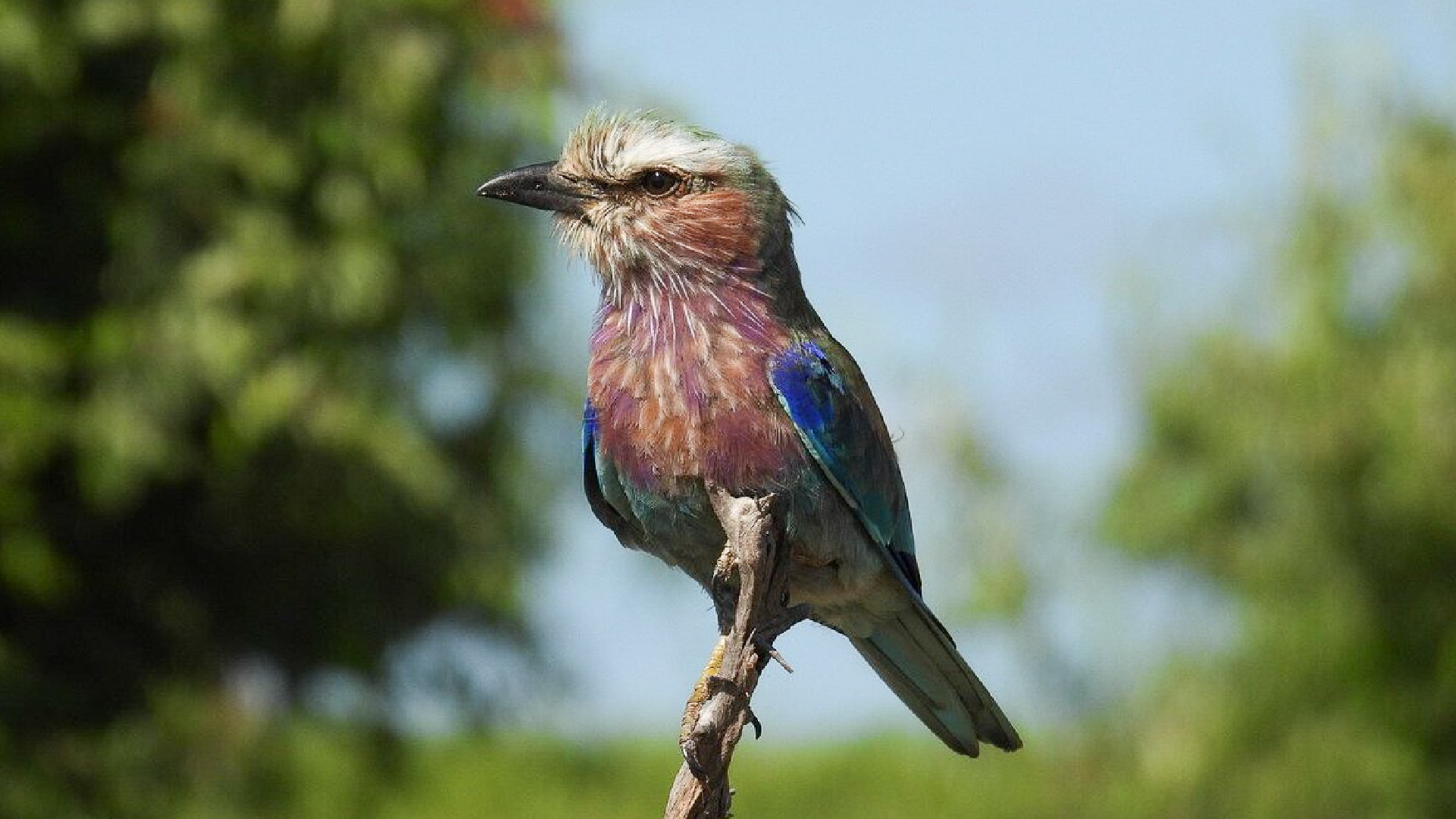
The lilac-breasted roller is a widely distributed and stunning bird species native to eastern and southern Africa. Renowned for its vibrant and colorful plumage, this bird captivates bird watchers, photographers, and nature enthusiasts alike.
Its feathers display a mesmerizing blend of greenish blue, lilac, turquoise, yellow, and brown hues, making it one of the most beautiful birds in the world. The plumage of the lilac-breasted roller features a lilac breast, turquoise underparts, green crown, blue and tan wings, making it one of Africa’s most beautiful birds. Also known by alternative names such as the lilac-throated roller, blue-breasted roller, fork-tailed roller, and Mosilikatze’s roller, this species belongs to the family Coraciidae, which is part of the roller group.
Its distinctive calls and acrobatic flight displays add to its allure, making it a favorite subject for wildlife photographers and a symbol of natural beauty in Africa.
In this blog, we take a detailed look at this beautiful bird, examining its habitat, behavior, and why it’s such a delight to observe as a bird lover.
The lilac-breasted roller is classified under the genus Coracias, which encompasses several roller species found across Africa and Eurasia. Two recognized subspecies exist: the lilac-breasted roller (Coracias caudatus caudatus) and the lilac-throated roller (Coracias caudatus lorti).
These subspecies differ slightly in plumage coloration; for example, the lilac-throated roller has a more pronounced lilac throat and azure breast, while the nominate lilac-breasted roller displays a deeper lilac breast and olive crown to mantle.
Juveniles lack the long tail streamers characteristic of adults and exhibit more subdued coloration, which helps them blend into their surroundings. Juvenile lilac-breasted rollers have a reddish-brown throat and breast that turns lilac as they mature. Both sexes of the species are similar in appearance, as the lilac breasted roller is not sexually dimorphic, meaning males and females share the same striking coloration.
The species is unofficially considered a national symbol of Kenya, affectionately known as “Kambu” in Swahili. Its presence is a source of pride and a reminder of Kenya’s rich biodiversity.
The lilac-breasted roller is widely distributed throughout eastern and southern Africa, ranging from the Red Sea coast of Eritrea and northeast Kenya, through Tanzania and Zambia, to northern South Africa.

It thrives in a variety of habitats but shows a preference for open woodland, savanna, bush, and grassland environments. The bird’s habitat is characterized by scattered trees for perching and nesting, and is absent from treeless deserts. The species typically avoids treeless areas, relying on trees and other high vantage points, such as poles and natural holes in trees, for perching and nesting.
Botswana, with its expansive savannas and open woodlands, offers prime habitat for the lilac-breasted roller. National parks like the Okavango Delta and Chobe National Park provide excellent opportunities to observe and photograph these birds in their natural environment.
The bird’s vibrant colors stand out beautifully against Botswana’s lush landscapes, making it a favorite among both local and visiting birdwatchers.
Often found perched at a fair height, lilac-breasted rollers use these vantage points to spot insects, small birds, and other prey on the ground. Their distribution includes protected national parks and reserves, as well as less disturbed rural areas. During the breeding season, some populations may exhibit migratory behavior, such as the lilac-throated roller subspecies, which migrates to northwest Somalia.
The lilac-breasted roller is highly territorial and extremely aggressive in defending its nesting area. They are monogamous and believed to mate for life, with both parents aggressively defending their nests from intruders. Nesting takes place in natural holes found in tree trunks or in termite mounds, which the birds do not excavate themselves but rather occupy once vacated by woodpeckers or kingfishers.
Both males and females share incubation duties, which last approximately 22 to 24 days until the eggs hatch. The chicks are born altricial and become fully feathered around 19 days after hatching.
Known for their acrobatic flight displays, lilac-breasted rollers perform rolling dives and swoops at a fair height, often accompanied by harsh, discordant cries. Lilac-breasted rollers primarily communicate through a harsh, chattering call, though they are mostly quiet.
These displays serve both courtship and territorial defense purposes. The birds typically live in pairs or small groups and are often seen perched alone or together on other high vantage points.
Their diet mainly consists of insects such as grasshoppers, beetles, spiders, scorpions, and snails, as well as small vertebrates like slow moving lizards, chameleons, snakes, and small birds.
The lilac breasted roller is known to spot insects from its perch and swoop down swiftly to catch them on the ground. For larger prey, the bird carries it back to a perch and uses its wings to batter the prey until it is safe to eat.
Interestingly, lilac-breasted rollers have been observed taking advantage of grassland fires, joining other bird species such as bee-eaters and storks in feeding on animals fleeing the flames. Their fearless nature allows them to hunt in close proximity to humans and other large animals.
Capturing the lilac breasted roller in its full glory requires patience and some strategic planning. Here are some tips for photographers hoping to snap stunning images:
In Botswana’s national parks, photographers often find the lilac breasted roller perched prominently on bare branches or fence posts, providing ideal vantage points for striking portraits.
According to the International Union for Conservation of Nature (IUCN), the lilac breasted roller is currently listed as a species of least concern. Its wide distribution and stable population contribute to this favorable status. The species is classified as ‘Least Concern’ by the IUCN and has a large and stable population.
However, the species faces threats from habitat loss and fragmentation due to human activities, including agriculture and urban development.
Climate change and environmental disturbances may also impact their habitats in the future. Conservation efforts are underway in several countries to protect the lilac-breasted roller’s habitat, including the establishment of protected areas and the promotion of sustainable land-use practices.
The lilac-breasted roller is also protected by law in some regions and is considered an important part of the world’s natural heritage.
Continued research and monitoring are essential to ensure the species remains abundant and to develop effective conservation strategies.
The lilac-breasted roller remains a vibrant jewel of the African skies, enchanting all who are fortunate enough to witness its beauty and remarkable behavior.
Whether perched atop a tree in Botswana’s savannas, soaring through the air with spectacular acrobatics, or fiercely defending its nest, this bird is a true symbol of the wild and colorful world alive in Africa.
The lilac breasted roller is widely distributed across eastern and southern Africa. It prefers habitats with open woodland, savanna, and scattered trees, avoiding treeless deserts. Countries like Kenya, Botswana, Tanzania, and northern South Africa offer prime locations to observe this beautiful bird.
This bird features a vibrant mix of colors including lilac on the breast, turquoise underparts, a green crown, and blue and tan wings. Its multicolored feathers make it one of Africa’s most beautiful birds and a favorite among bird watchers and photographers.
No, the lilac breasted roller is not sexually dimorphic. Both males and females share the same striking coloration and long tail streamers, making it difficult to distinguish between the sexes by appearance alone.
The lilac breasted roller primarily feeds on insects such as grasshoppers, beetles, spiders, and scorpions. It also preys on small vertebrates like slow-moving lizards, snakes, chameleons, and small birds.
This bird perches on high vantage points to spot prey and swoops down swiftly to catch insects and small animals on the ground. For larger prey, it carries them back to a perch and uses its wings to batter and dismember them before eating.
Lilac breasted rollers nest in natural holes in trees or termite mounds, often using cavities vacated by woodpeckers or kingfishers. Both parents share incubation duties, fiercely defending the nest from intruders.
Generally, lilac breasted rollers are non-migratory but may exhibit some local nomadic movements post-breeding to find food, water, and suitable nesting sites. The lilac throated roller subspecies migrates seasonally in parts of northeast Africa.
The lilac breasted roller is classified as a species of Least Concern by the IUCN due to its wide distribution and stable population. However, habitat loss from human activities remains a potential threat.
Photographers should aim for early morning or late afternoon light to capture the bird’s vivid colors. Using a telephoto lens and approaching stealthily or from a vehicle helps avoid disturbing the bird, especially during its acrobatic flight displays.
The lilac breasted roller’s vibrant and diverse colors symbolize Kenya’s rich cultural and natural diversity. It is affectionately known as “Kambu” in Swahili and is a beloved emblem of Kenya’s wildlife heritage.